

Software Engineering Institute | Carnegie Mellon University · 2 hours ago
AI Engineer - Mission Innovation Lab - 2024074
 Arlington, VA
 Full-time
 Onsite
 Mid, Senior Level
 4+ years exp
The Software Engineering Institute at Carnegie Mellon University is focused on advancing applied artificial intelligence for defense and national security. The AI Engineer will develop and implement AI solutions, working closely with researchers and government sponsors to translate innovative AI concepts into practical applications for mission capabilities.
ComputerCyber SecurityEducationSoftware

 No H1B
 Security Clearance RequiredU.S. Citizen Only
Hiring Manager
Bill Scully


Responsibilities
Design, develop, and fine‑tune a variety of AI models
Design autonomous agents and multi‑step pipelines using LangChain, ReAct, tool‑calling, or custom orchestration; employ the Model Context protocol to manage stateful interactions
Build Retrieval‑Augmented Generation pipelines that combine external knowledge bases with LLMs to improve factual accuracy for warfighting applications
Implement end‑to‑end data pipelines, ETL processes, and back‑end services (Python, C/C++, Java) that feed data to models
Create CI/CD pipelines for model training, validation, containerized deployment (Docker/Kubernetes), and security scanning; maintain model registries, monitoring, and version control of context protocols
Produce rapid prototypes, run benchmarks, and conduct robustness/adversarial testing in realistic environments
Work closely with senior ML engineers, software developers, and government customers; mentor junior staff and contribute to design reviews and documentation
Stay current with emerging LLM architectures, agentic paradigms, PEFT/LoRA methods, and AI‑safety techniques; translate new research into operational capabilities

Qualification
Required
Bachelor's degree in Computer Science, Machine Learning, Statistics, Applied Mathematics, or a related field with at least four years of relevant experience (or an M.S. with two years)
Ability to obtain and maintain an active Department of War (DoW) security clearance
You must be able and willing to work onsite 5 days per week at an SEI office in either Pittsburgh, PA or Arlington, VA
Proficiency in Python and at least one compiled language (C/C++ or Java); experience with REST/GraphQL APIs and containerization
Strong grasp of ML theory (supervised, unsupervised, reinforcement learning) and evaluation metrics
Hands‑on experience fine‑tuning LLMs and using frameworks such as Hugging Face Transformers, LangChain, or comparable agent tools
Familiarity with building RAG pipelines (vector stores, dense/sparse retrievers)
Experience applying PEFT/LoRA methods (e.g., LoRA, adapters) to large models
Understanding of Model Context protocols for managing model state across multi‑turn interactions
Experience building evaluation frameworks, benchmarks, or data quality pipelines
Experience with TensorFlow, PyTorch, or JAX; knowledge of data‑pipeline tools (Airflow, Prefect, Ray) is a plus
Awareness of DevSecOps practices (CI/CD, GitOps, container security scanning, model‑registry concepts) is desirable
Preferred
Deploying LLM APIs (FastAPI, gRPC) at scale, handling latency and load balancing
Building multi‑tool agents, planner‑executor loops, or tool‑calling pipelines for complex decision‑making
Conducting adversarial testing, implementing input sanitization, and contributing to AI‑safety research
Utilizing GPU/TPU resources, mixed‑precision training, and distributed training frameworks such as DeepSpeed or ZeRO
Prior work on defense, intelligence, or government‑focused AI projects and familiarity with DoW acquisition or compliance processes
Contributing to open‑source AI and ML libraries, agentic frameworks, or context‑protocol implementations

Company
Software Engineering Institute | Carnegie Mellon University


At the SEI, we research complex software engineering, cybersecurity, and AI engineering problems; create and test innovative technologies; and transition maturing solutions into practice.
 501-1000 employees
Funding
Current Stage
Late StageLeadership Team
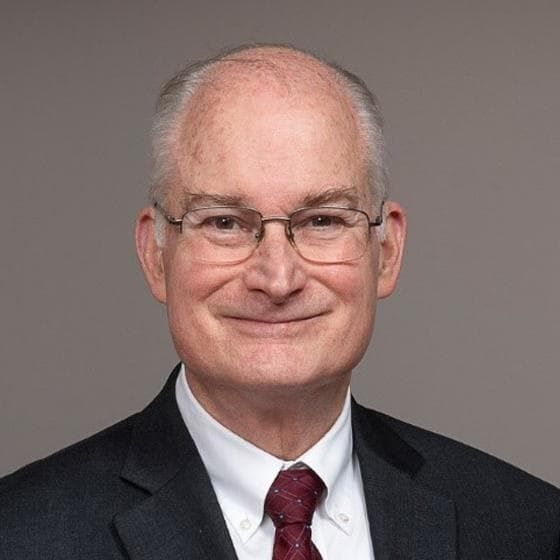
Paul Nielsen
Director and CEO

Christopher Herr
Senior Engineer/Cybersecurity Exercise Developer and Trainer
Recent News
Seattle TechFlash
2025-06-25
2025-04-30
2025-04-10
Company data provided by crunchbase