
Customer Service Remote Jobs: Roles, Pay & What to Expect
Table of Contents
It’s midnight, and you’re panic-applying to every listing for Customer Service Remote Jobs you can find. You hit “submit,” feel a fleeting sense of productivity, and then… silence. I see smart candidates fall into this “application black hole” constantly, and I know how exhausting it is. But here’s the thing: treating your job search like a lottery isn’t just tiring—it’s ineffective. I’m Dora, and today we’re stopping the guesswork. I’m breaking down the real Roles, Pay & What to Expect so you can stop spraying resumes blindly and start landing interviews that actually matter.
We know the ‘application black hole’ is exhausting. Instead of guessing which keywords pass the screening, let Jobright.ai match your resume to over 8 million active listings and identify the remote roles you are actually qualified for.
What Counts as a Customer Service Remote Job?
A customer service remote job is any role where you support customers while working off-site (usually from home). The work can be phone calls, chat, email, social media, or a mix. Some companies call it “support,” some call it “client care,” and some hide it inside a fancy title.
If you’re coming from SWE/PM/Data, think of customer service as the front line. You’re the person debugging human problems, not code. Same idea: reproduce the issue, isolate the cause, document clearly, and close the loop.
Common titles employers use
When you search, don’t lock onto one title. The same job shows up under different labels. Common ones include:
- Customer Support Specialist / Customer Support Representative
- Customer Service Representative (CSR)
- Client Support Associate
- Remote Client Care Specialist (often the same as customer service)
- Technical Support Representative (can overlap with remote help desk jobs)
- Tier 1 Support / Tier 2 Support (support levels)
- Contact Center Agent (usually phone-heavy)
SEO note: if you’re searching broadly, rotate keywords like remote customer service jobs, work from home customer service jobs, and customer support remote jobs. Each keyword cluster pulls different postings.
Customer service vs help desk vs customer success
These get mixed up a lot, so let’s make it simple.
- Customer service: focuses on fixing issues and answering questions fast. Metrics are often handle time, CSAT, and resolution rate.
- Help desk (IT/help desk support): internal or external technical troubleshooting. Think passwords, device access, basic systems. These are closer to remote help desk jobs and may ask for basic IT knowledge.
- Customer success: focuses on keeping customers long-term and driving adoption. More relationship, more account work, sometimes upsell. Metrics lean toward retention and expansion.
Recruiters won’t tell you this, but: customer success roles often want prior SaaS experience, while customer service roles will train you, if your resume shows reliable communication and calm problem solving.
The Main Types of Customer Service Remote Jobs
Not all remote customer service jobs feel the same. The job title might match, but the day-to-day can be totally different. When I coach candidates, I sort roles by the support channel and the pace. That’s what decides your stress level and your growth options.
Phone-based and high-volume support roles
These are the classic call-center style jobs, just remote.
What it’s like:
- You’re taking calls back-to-back for most of the shift.
- You follow a script or call flow, but you still need judgment.
- You often do identity checks, refunds, order issues, shipping problems.
Common metrics:
- Average Handle Time (AHT)
- First Call Resolution (FCR)
- Adherence (were you on time and on the right status)
- CSAT
Tough love: if you hate being timed, this will drain you. The algorithm isn’t just for ATS parsing, many contact centers track performance in near real time.
But there’s upside. High-volume roles can hire faster, and if you quantify results (“Improved CSAT from 4.2 to 4.6 across 200+ weekly cases”), your resume gets stronger quickly.
Chat, email, and account-facing support roles
These feel calmer for many people, but they still move fast.
What it’s like:
- You handle multiple chat threads at once.
- Email work can involve deeper investigation and better writing.
- Some roles assign you a small customer set (light account management).
Common tools:
- Ticketing systems (Zendesk, Freshdesk, Intercom)
- Knowledge bases (Notion, Confluence, Guru)
- CRMs (Salesforce, HubSpot)
These roles tend to reward strong writing and clear thinking. If you’re a tech professional, this is where your “structured communication” skill becomes leverage. You can write like an engineer: steps, expected outcome, actual outcome, screenshot, next action.
If you see titles like remote client care jobs or “Account Support,” it’s often this category.
What Employers Usually Look For
Most people think they’re rejected because they lack experience. Sometimes, yes. In fact, many candidates specifically hunt for remote jobs no experience required, but often it’s simpler: the resume doesn’t match the role’s keyword match rules, or it doesn’t prove the employer’s top two fears.
Those fears are: “Will this person make customers angrier?” and “Will this person show up and follow process?”
Communication and de-escalation
De-escalation is not “being nice.” It’s a mechanism:
- Name the problem (“You expected X, but you got Y.”)
- Show ownership (“I’ll handle this with you.”)
- Give a clear next step (timeline + action)
On your resume, don’t just write “good communication.” To really stand out, you need to highlight the top skills for customer service. (Also, I avoid “good/bad” because it’s vague.) Quantify it.
Better bullets:
- “Resolved 60–80 tickets/week with 95%+ QA score.”
- “De-escalated billing disputes: kept refund rate under 3% while maintaining CSAT 4.7/5.”
- “Wrote 12 help articles that reduced repeat contacts by 18% (data-backed).”
Stop guessing. Let’s look at the data: hiring teams trust metrics because it reduces risk.
CRM, ticketing, and schedule reliability
In remote roles, reliability is a core competency. Many rejections happen when employers suspect you’ll disappear mid-shift.
What they want to see:
- Familiarity with CRM and ticket workflows
- Clean documentation habits
- Comfort with templates/macros
- Strong schedule adherence
ATS angle: if the job post says “Zendesk,” “Salesforce,” “SLAs,” “CSAT,” or “KPIs,” those words matter. ATS parsing looks for aligned terms. You don’t need to keyword-stuff. But you do need alignment.
If you’re new, be honest but specific:
- “Used Jira Service Management to track issues and meet SLAs.”
- “Logged customer notes consistently: escalated based on severity and impact.”
And if you’re an international candidate: watch for roles that say “must be authorized to work without sponsorship.” Customer service roles can sponsor, but it’s less common than in engineering. Don’t waste cycles where the policy is explicit.
Pay, Shifts, and Role Quality
Pay in customer service remote jobs ranges a lot. Two roles can both say “Customer Support Specialist” and be $16/hour vs $30/hour. The difference isn’t luck. It’s usually role scope, channel difficulty, and business model.
What changes pay
In my experience reviewing offers and coaching negotiations, pay tends to rise with:
- Technical complexity (troubleshooting software, APIs, device setups)
- Revenue proximity (supporting paying B2B accounts vs one-time consumer orders)
- Shift coverage (nights, weekends, holidays)
- Language skills (bilingual support can add leverage)
- Ownership (handling escalations, chargebacks, fraud, or compliance)
Data point you can sanity-check: the US Bureau of Labor Statistics tracks pay for customer service reps and shows wide variation by industry and seniority. It’s a helpful baseline when you’re reality-checking an offer: BLS Customer Service Representatives overview.
Negotiation tip (simple script):
- “Based on the role scope (tickets/day, channels, and required tools), I’m targeting $X. Is that aligned with your range?”
That question forces range alignment early. It also saves you from late-stage surprises.
Which customer-facing roles offer better long-term fit
If you want growth (and less burnout), look for roles with one or more of these signals:
- B2B SaaS support (often clearer processes, better tooling)
- Email/chat-first support (less emotional heat than phone-only)
- Tiered support structure (clear promotion path: Tier 1 → Tier 2)
- Knowledge base ownership (you improve systems, not just answer tickets)
- Cross-functional exposure (working with Product/Engineering)
Recruiters won’t tell you this, but: “fast-paced environment” often means “we’re understaffed.” I’m not saying avoid it. I’m saying price it in.
One more tough-love point: if a company pays low and monitors you like a machine, you’ll have no leverage. Your ROI comes from picking roles where you can build transferable proof, metrics, process improvements, and writing samples.
Salary Expectations Table
| Role Category | Experience Level | Est. Hourly Pay | Est. Annual Salary | Key Factors |
| General Customer Service (CSR) | Entry-Level | $16 – $21 | $33,000 – $43,000 | Volume-based, standard scripts, shift work. |
| Specialized Support (Bilingual/Medical) | Mid-Level | $22 – $28 | $45,000 – $58,000 | Requires specific licenses or bilingual fluency. |
| Technical Support (Tier 1) | Entry to Mid | $24 – $32 | $50,000 – $66,000 | Requires IT troubleshooting knowledge. |
| Customer Success Specialist | Mid to Senior | $30 – $45+ | $62,000 – $90,000+ | Focus on retention; B2B SaaS experience often required. |
Source: Ranges estimated based on US Bureau of Labor Statistics (May 2024 data) and aggregated active listings from Indeed & Glassdoor (2025).
Where to Find Better Remote Customer Service Listings
Most people search the same big job boards, then wonder why every posting feels spammy. Better listings exist, but you have to change your strategy.
Places I’ve seen higher-signal postings:
- Company career pages (especially SaaS and fintech, or major retailers hiring for Amazon remote jobs and similar positions)
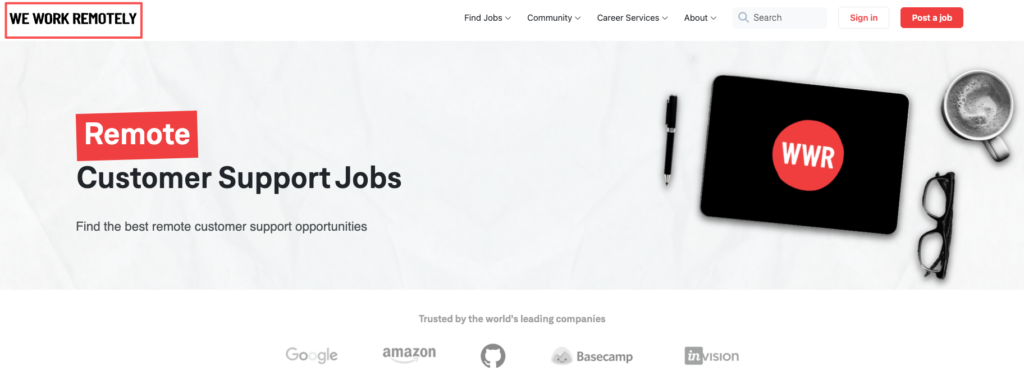
- Remote-focused boards like We Work Remotely and Remote OK
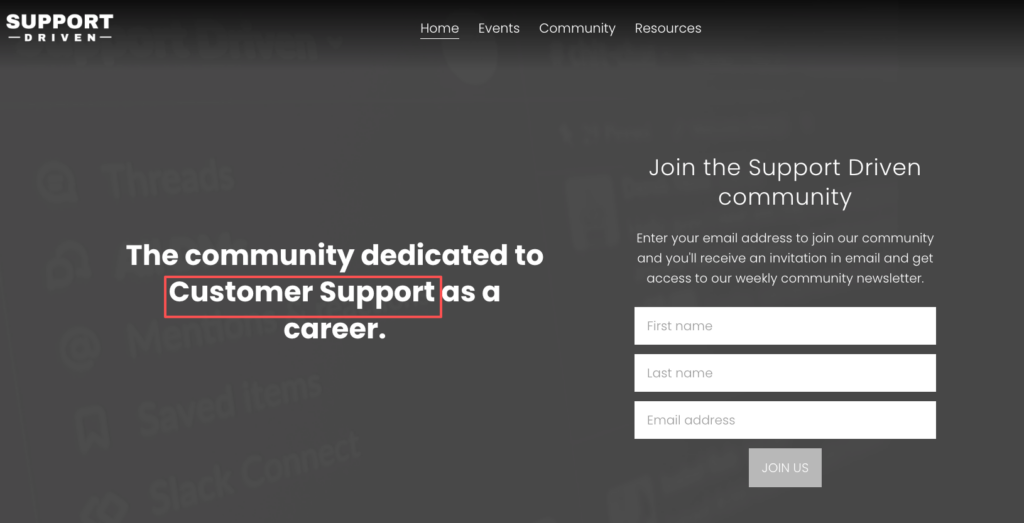
Customer support communities and curated boards (some roles get shared in niche groups before they hit the big boards)
- LinkedIn, but filtered: search “Customer Support” + “Remote” + “Posted in last 24 hours”
For international candidates: always check work authorization language early. And if you’re targeting sponsorship, use a second track: identify sponsor-friendly employers using credible sources like myvisajobs.com to see historical H-1B filings. It’s not perfect, but it’s data-backed and faster than guessing.
What to check in a real listing before you apply
Before you invest time, scan for these signals:
- Tooling listed clearly (Zendesk, Intercom, Salesforce, etc.)
- Metrics named (CSAT, SLAs, tickets/day). Vague postings often mean vague operations.
- Schedule expectations (time zone, weekend rotation, overtime rules)
- Training and QA process (do they coach, or just punish numbers?)
- Pay range posted (not always, but it’s a strong trust signal)
- Work authorization (especially if you need visa sponsorship)
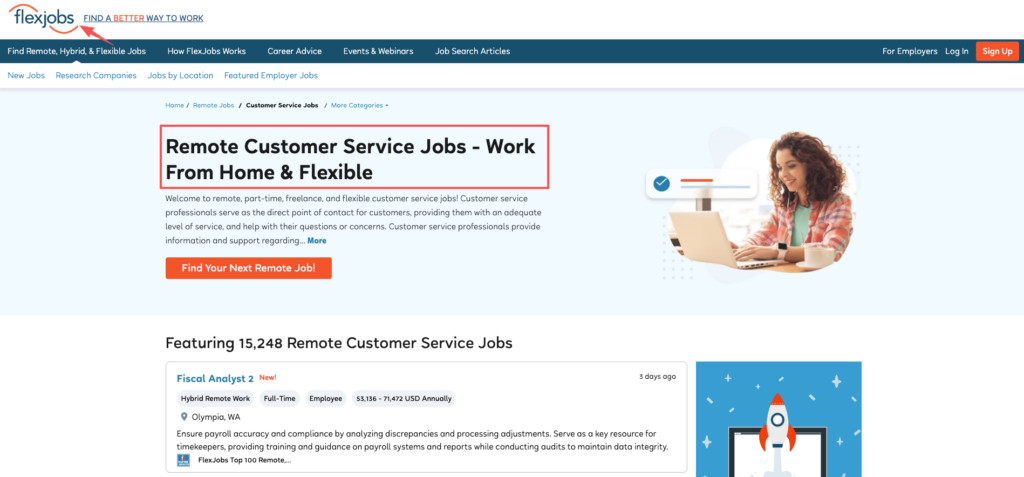
You need a benchmark to spot the red flags. For instance, legitimate customer service remote jobs will be transparent about their tech stack and salary, exactly like this active listing.
ATS hack (clean and ethical): mirror the job’s language in your resume where it’s true. If the listing says “ticketing system,” and you wrote “case tool,” change it to “ticketing system.” That’s keyword match without lying.
And please don’t spray 200 applications. Track your conversion rate instead:
- Applications sent
- Recruiter screens
- Interviews
- Offers
If your screen rate is under ~5%, it’s usually an optimization problem, not a “market” problem.
Final Take
Customer service remote jobs can be a smart move if you treat them like a career track, or a strategic bridge, not a desperation click.
Here’s the harsh truth: the people who “get lucky” usually built alignment on purpose.
Who this path suits best
This path fits you if:
- You want remote work stability and can handle structured workflows
- You’re calm under pressure and can de-escalate without taking it personally
- You like clear metrics and can improve them over time
- You want an entry point into SaaS, fintech, or tech ops
It’s a tougher fit if you hate scripts, strict schedules, or constant customer contact.
What to do before you apply
Do these three steps first. They take an hour, and they raise your odds.
- Pick a lane: phone-heavy vs chat/email vs account-facing support.
- Rewrite your top 6 resume bullets using metrics (tickets/week, CSAT, QA, resolution rate). Quantify impact.
- Optimize for ATS parsing: match the posting’s keywords (CRM, ticketing, SLAs) and keep formatting simple.
If you’re like me, you want progress you can measure. So measure it: track your conversion rate weekly and adjust. That’s how you step out of the application black hole, and into a role that actually pays and builds leverage.
Frequently Asked Questions About Customer Service Remote Jobs
What are customer service remote jobs, and what do you actually do day to day?
Customer service remote jobs are roles where you support customers from home via phone, chat, email, or social media. Day to day, you resolve issues, document cases, follow workflows, and close the loop with clear next steps—often using ticketing systems, CRMs, and knowledge bases to meet SLAs and CSAT goals.
Why do I keep getting rejected from customer service remote jobs after applying to dozens of listings?
The most common reason is ATS misalignment, not a lack of ability. If your resume doesn’t mirror the posting’s keywords (Zendesk, Salesforce, SLAs, CSAT, KPIs) or doesn’t prove reliability and de-escalation, screening algorithms may filter you out before a human ever reviews your application.
What’s the difference between customer service, help desk, and customer success remote roles?
Customer service focuses on fast issue resolution and metrics like handle time, CSAT, and resolution rate. Help desk is more technical troubleshooting (often passwords, access, devices) and overlaps with remote help desk jobs. Customer success emphasizes retention, adoption, and relationships and often prefers prior SaaS experience.
Which types of customer service remote jobs are less stressful: phone, chat, or email?
Chat and email support can feel calmer than phone-heavy call-center work, but they still move fast (multi-chat, detailed investigations, heavy writing). Phone roles are often back-to-back and closely timed with AHT and adherence tracking. Your best fit depends on pace tolerance, scripts, and schedule rigidity.
How can I optimize my resume for ATS when applying to remote customer service jobs?
Use clean formatting and match the job’s language where it’s true. If the listing says “ticketing system,” use that term instead of “case tool,” and include relevant tools (Zendesk, Intercom, Salesforce) plus metrics (tickets/week, QA score, CSAT, FCR). Avoid keyword stuffing—aim for precise alignment.