
Accounting Remote Jobs: Roles, Pay & Best Entry Points
Table of Contents
Here is a harsh truth that most recruiters won’t tell you: searching broadly for accounting remote jobs is the absolute fastest way to ruin your hireability. I’m Dora, and I constantly see candidates making the mistake of treating AP, AR, and staff accounting roles as entirely interchangeable. They aren’t. Companies don’t hire remote finance teams based on generic skills; they hire based on risk management and strict workflow controls. After testing resume parsing algorithms against hundreds of remote finance listings, the data is clear: applying to everything means you qualify for nothing. Instead of playing the volume game, you need to understand how these roles are actually tiered. Let’s dismantle the myths and look at the real roles, realistic pay scales, and the absolute best entry points to successfully pivot.
What Counts as an Accounting Remote Job?
When most people say work from home accounting jobs, they often mix together bookkeeping, payroll, AP, AR, staff accounting, and even finance analyst roles. That creates confusion fast.
Recruiters won’t tell you this, but remote accounting jobs are usually grouped by risk. The more a role touches cash movement, audits, close processes, or judgment-heavy entries, the more selective employers become. Some companies are fully remote. Others are hybrid but show up in searches anyway, so read carefully.
Accounting vs bookkeeping vs AP/AR roles
According to Investopedia’s breakdown of accounting vs bookkeeping careers, bookkeeping usually covers daily transaction records. Think reconciliations, categorizing expenses, invoice tracking, and keeping the books clean. Many remote bookkeeping jobs sit here, especially at small businesses and agencies.
Accounting roles often go a level deeper. You may handle journal entries, accruals, month-end close support, financial statement prep, variance checks, or compliance tasks. These jobs usually expect stronger spreadsheet skills and tighter process discipline.
AP and AR roles sit in their own lane. As Thomson Reuters explains in their AP vs AR comparison:
- Accounts payable: processing invoices, coding bills, approvals, vendor records, payment timing
- Accounts receivable: invoicing customers, payment follow-up, cash application, aging reports, collections support
That’s why you’ll see so many remote accounts payable jobs compared with broader accountant openings. AP and AR are process-driven, easier to document, and often easier to measure with metrics like processing speed, error rate, and turnaround time.
Which accounting functions go remote most easily
The functions that move remote most easily are the ones with clear workflows, digital documents, and defined controls. In plain English: if the process already lives in an ERP and follows a checklist, it has a better shot at being remote.
The most common remote-friendly functions include:
- AP invoice processing
- AR billing and collections follow-up
- Bank and account reconciliations
- Payroll support
- Expense review and coding
- Staff accounting tied to month-end close
- Bookkeeping for smaller firms or outsourced finance teams
Roles that are harder to land fully remote usually involve on-site audit work, inventory observation, physical check handling, or close partnership with leadership on confidential planning. Not impossible, just less common.
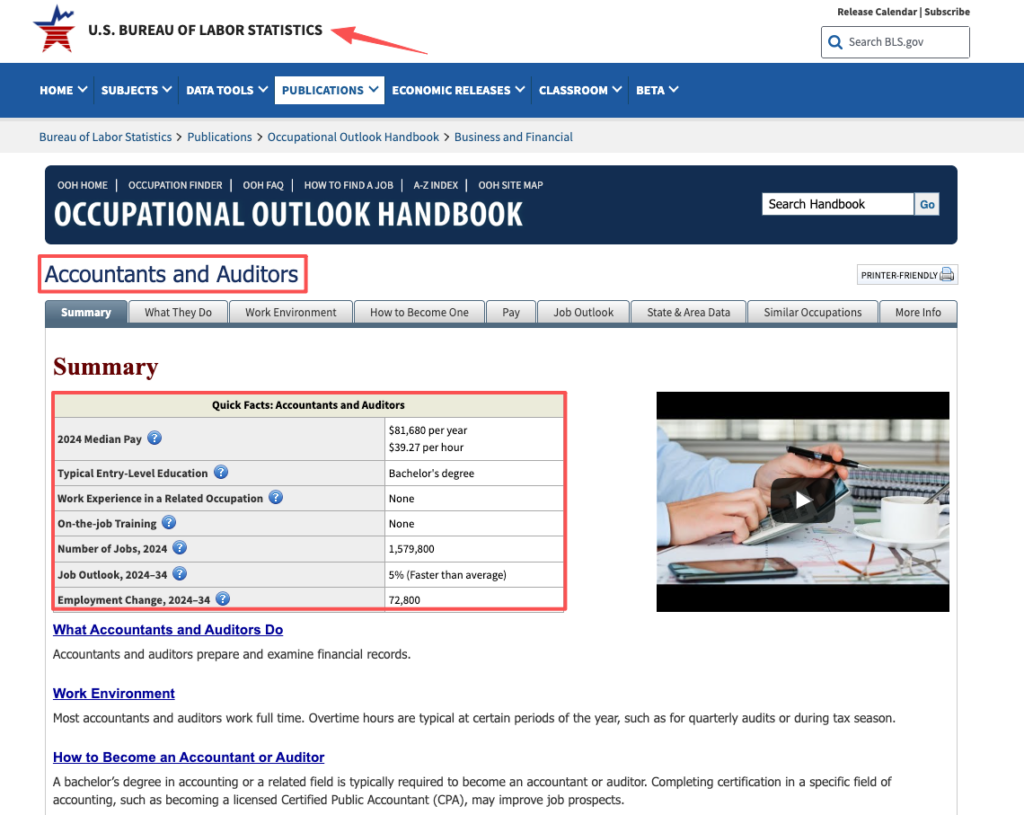
According to the U.S. Bureau of Labor Statistics, accountants and auditors continue to have steady demand, but remote access depends heavily on employer systems and internal controls. In my consulting work, I’ve also seen a simple pattern: companies with mature cloud tools hire remote sooner: companies still living in spreadsheets and paper move slower.
The Main Types of Accounting Remote Jobs
If you’re trying to break in, don’t search too broadly. Narrow by function and trust level. That gives you a stronger strategy and better conversion rate from application to interview.
Accounts payable, receivables, and staff accounting paths
These are often the best starting points for people targeting entry-level accounting remote jobs or early-career transitions. As AccountingCoach notes in their guide on bookkeeper vs accountant differences, understanding where each role begins and ends is critical before you apply.
Accounts payable roles are common because the workflow is structured. You review invoices, match them to purchase orders, route approvals, and prepare payments. Employers like candidates who can quantify volume, like “processed 250 invoices per week with 98% accuracy.”
Accounts receivable roles focus on the money coming in. You may send invoices, apply cash, manage aging, and support collections. If you’ve ever improved follow-up timing or reduced overdue balances, that’s strong resume material.
Staff accountant roles usually ask for more ownership. You might support close, post journal entries, run reconciliations, and help prepare monthly reporting. These are still among the more accessible remote accounting jobs, but they often want at least some close-cycle experience.
And yes, some bookkeeping roles are easier entry points than staff accountant titles. If you’re earlier in your career, don’t ignore remote bookkeeping jobs. They can build the exact system exposure and month-end habits employers want later.
Higher-trust roles that usually need stronger experience
Once you move into senior accountant, accounting manager, revenue accounting, technical accounting, or controller-track roles, the bar goes up. According to Robert Half’s research on in-demand finance and accounting roles, these positions are increasingly competitive precisely because employers are prioritizing reliability over task completion alone.
Higher-trust remote roles may include:
- Senior accountant
- Revenue accountant
- GL accountant
- Payroll manager
- Tax accountant
- Accounting manager
- Assistant controller
Why are these harder? Because employers are buying reliability, not just task completion. They want someone who can spot issues before they become expensive.
I’ve seen hiring teams filter for people who can explain things like deferred revenue, accrual logic, intercompany entries, or close delays in plain language. That’s not just accounting knowledge. It’s trust.
For international candidates, there’s another layer. Fully remote accounting jobs with visa sponsorship are less common than in software roles. Many accounting teams prefer location limits due to tax rules, payroll compliance, and data controls. So if sponsorship matters, check employer policy early and don’t burn time on listings with silent geographic restrictions.
What Employers Usually Look For
Here’s the harsh truth: most rejections are not personal. They’re pattern-based. Your resume either shows alignment with the role’s mechanism, or it doesn’t.
For accounting remote jobs, employers usually screen for three things first: can you be trusted with details, can you work inside a deadline rhythm, and can you learn their systems without drama.
Accuracy, spreadsheets, and month-end discipline
Accuracy is not a soft trait in accounting. It’s a measurable business need. Small errors can create payment delays, reporting mistakes, or audit issues.
That’s why good resumes quantify outcomes. Instead of saying you “helped with reconciliations,” say you “reconciled 35 bank and balance sheet accounts monthly with under 1% exception rate.” Quantify your impact whenever you can. It improves ATS parsing and gives recruiters data-backed proof.
Spreadsheet skill also matters more than people admit. In many teams, Excel is still the bridge between ERP exports and final review. Common asks include:
- Pivot tables
- VLOOKUP/XLOOKUP
- SUMIFS
- basic error checks
- clean formatting and audit trails
Then there’s month-end. If you’ve supported close, say so clearly. Recruiters search for phrases like month-end close, journal entries, reconciliations, and variance analysis. That keyword match matters because ATS algorithm filters often look for exact terms from the listing.
Why ERP and workflow familiarity matter
Recruiters won’t tell you this, but ERP familiarity can move you ahead of people with similar titles. If you know NetSuite, SAP, Oracle, Workday, QuickBooks, Xero, or Microsoft Dynamics, put that where it’s easy to find.
Why? Because remote teams need low-friction onboarding. If you already understand approval flows, document controls, and system logic, your ramp time is shorter. That improves hiring ROI for the company.
Workflow tools matter too. Bill.com, Concur, Expensify, Coupa, FloQast, and BlackLine often show up around AP, expenses, and close support. Even light exposure helps.
A smart resume strategy is simple:
- Mirror the exact system names from the job post.
- Pair each tool with a task or result.
- Keep the wording ATS-friendly and clean.
For example: “Used NetSuite for AP coding, vendor maintenance, and weekly payment batch review.” That sentence is stronger than just listing “NetSuite” in a skills block.
If you want a benchmark for digital skill expectations, the AICPA has been clear for years that accounting work is becoming more tech-heavy. Employers now expect system comfort, not just textbook accounting knowledge. That’s why optimization matters. Your resume must show both accounting basics and workflow readiness.
We just showed you why a generic resume won’t land you a remote accounting job. Now it’s time to build one that will. Try Jobright.ai to automatically tailor your resume for specific AP, AR, or staff accounting roles and optimize it for ATS.
Where to Find Better-Fit Accounting Listings
This is where many people waste weeks. They search “remote accounting jobs,” click the top boards, and apply to everything that looks close enough.
Stop. That is not a strategy.
Better-fit listings usually come from three buckets: direct company career pages, specialized accounting/finance recruiters, and curated remote boards with clearer filters. Large job boards are still useful, but only if you filter hard by title, seniority, pay range, and location rules.
I tell clients to scan job posts like a product spec. Look for clues about scope, trust, and pace. If a posting asks for AP, reconciliations, and close support, that’s closer to staff accounting. If it’s mostly invoice routing and vendor questions, it’s more pure AP. That distinction helps you tailor your value prop.
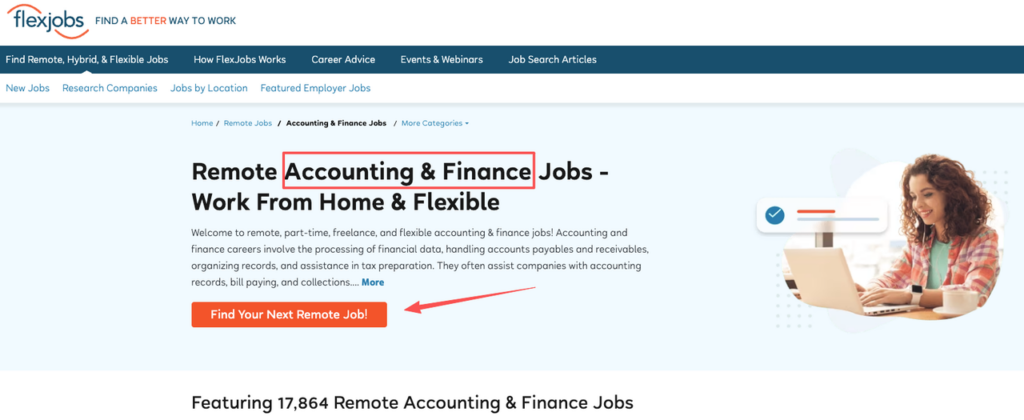
Helpful places to start include company career pages, LinkedIn Jobs, Indeed, and remote-first boards like FlexJobs’ remote accounting listings. For salary checks, compare against Robert Half’s annual salary guide for finance and accounting. I also like checking whether the company mentions cloud ERP tools in the description. That’s often a strong signal the role can work well remotely.

How to compare live roles by scope and seniority
When you compare listings, don’t just ask, “Can I do this?” Ask, “What level of trust is this company buying?”
Use this quick filter:
- Entry-level/AP-heavy: invoice processing, vendor support, cash application, basic reconciliations
- Mid-level/staff accounting: journal entries, month-end close, accruals, balance sheet reconciliations, reporting support
- Higher-level: ownership of close, audit coordination, policy interpretation, process improvement, team review
Then compare four things:
- Scope: one workflow or full-cycle accounting?
- Seniority: coordinator, specialist, accountant, senior accountant?
- Systems: ERP required or “nice to have”?
- Constraints: time zone, state residency, CPA, industry background, sponsorship limits?
This matters for ATS optimization too. If the title says “AP Specialist” and your resume headline says “Accounting Professional,” that’s weaker alignment than “Accounts Payable Specialist | NetSuite | Invoice Processing | Vendor Management.”
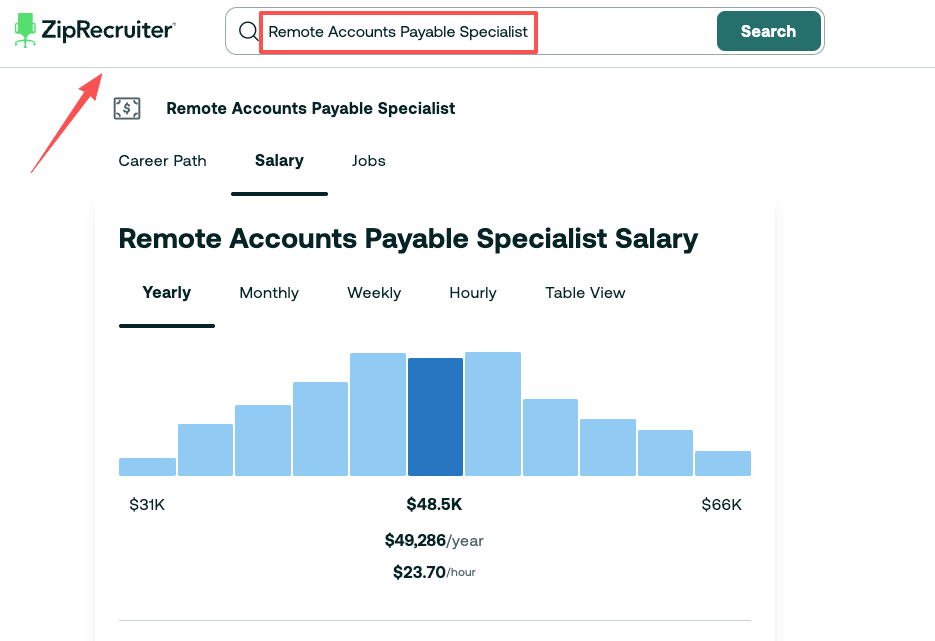
That small shift can improve parsing, keyword match, and interview conversion rate. And for salary benchmarking, ZipRecruiter’s data on remote accounts payable specialist compensation is a useful reference before you negotiate or filter by pay range. Again: stop guessing. Let’s look at the data.
One more thing. If a listing is vague, overloaded, or asks for five jobs in one, be careful. Some remote roles are clean. Others are chaos in a nice font. For a benchmark of what a well-scoped description actually looks like, review this active accounting remote job listing to see how responsibilities and ERP requirements are clearly defined.
Final Take
If you’ve been stuck in the application black hole, I get it. Remote job hunting can mess with your confidence fast. But accounting is still one of the more structured paths into remote work if you target the right role and show the right signals.
Who accounting remote jobs suit best
These roles fit people who like process, accuracy, and steady routines. If you’re detail-oriented, calm under deadline pressure, and comfortable inside systems, you may do well in remote accounting jobs.
They’re also a solid fit for career changers with adjacent experience in operations, payroll, finance support, or admin work, if you can translate that experience clearly. For example, invoice handling, expense review, or reconciliation support can all strengthen your story.
But if you hate repetition, ignore details, or want fast-moving creative work all day, this may not be your lane. That’s not a judgment. It’s alignment.
What to do before you apply
Before you apply, do these five things:
- Pick one lane: AP, AR, bookkeeping, or staff accounting.
- Rewrite your resume for that lane using exact keywords from target roles.
- Quantify your work with metrics like volume, accuracy, close timing, or recovery amount.
- Move ERP, spreadsheet, and workflow tools higher on the page.
- Check location and sponsorship rules before you invest time.
Recruiters won’t tell you this, but generic resumes fail because they make hiring managers do the sorting work. Don’t make them do that.
If you’re like me, you don’t want more job-search theater. You want a practical strategy that gets replies. So start narrower, show stronger alignment, and apply with evidence. That’s how you turn “maybe” into interviews.
Frequently Asked Questions About Accounting Remote Jobs
What counts as an accounting remote job?
Accounting remote jobs include bookkeeping, accounts payable, accounts receivable, payroll support, staff accounting, and some finance-adjacent roles. Employers usually separate them by risk, system access, and judgment level, so not every work-from-home accounting job has the same responsibilities or hiring standards.
Which accounting remote jobs are easiest to get hired for?
The most accessible accounting remote jobs are often accounts payable, accounts receivable, bookkeeping, payroll support, and reconciliation-heavy roles. These jobs usually have structured workflows, clear metrics, and digital processes, which makes them easier for employers to manage remotely than higher-trust accounting positions.
What do employers look for in candidates for remote accounting jobs?
Most employers screen for accuracy, spreadsheet skills, month-end discipline, and familiarity with ERP systems. For accounting remote jobs, resumes perform better when they show measurable results, such as invoice volume, reconciliation counts, close support, and tools like NetSuite, SAP, QuickBooks, or Xero.
How can I improve my chances of landing accounting remote jobs?
Start by choosing one lane, such as AP, AR, bookkeeping, or staff accounting, then tailor your resume to match that role. Use exact job-post keywords, quantify your results, and highlight ERP, Excel, and workflow tools near the top. Strong alignment usually improves ATS matching and interview rates.
Are remote bookkeeping jobs better than remote staff accountant roles for beginners?
For many beginners, remote bookkeeping jobs can be a more realistic starting point than staff accountant roles. Bookkeeping often builds the transaction, reconciliation, and system habits employers want later, while staff accountant positions usually expect more month-end close experience and stronger ownership of accounting tasks.
Recommended Reads