
Stop Being Invisible: Entry Level Remote Jobs
Table of Contents
Last Updated: January 09, 2026
Why Your Resume is Invisible (And How to Fix It)
There is a reason why you can send dozens of applications and hear absolutely nothing back. It’s not because you aren’t qualified. It’s because for entry-level remote roles, the hiring process is no longer human-first—it’s algorithm-first.
If your application doesn’t speak the specific language of the modern Applicant Tracking System (ATS), you are invisible before the race even starts. The difference between rejection and an interview invite isn’t usually your experience; it’s your keyword strategy.
We are going to fix your visibility today. This guide tears down the automated barriers between you and your first remote job. You’ll learn:
- Market Intelligence: Which industries are actually hiring beginners in 2026 (backed by data).
- Role Selection: The specific job titles to target and the “fake” listings to archive.
- Keyword Engineering: A checklist of terms that force recruiters to pay attention.
- Your First Week Plan: A 7-day schedule designed to get you out of the inbox and into the interview room.
Top Industries for Entry Level Remote Jobs in 2026 (Salary Data + Growth Rates)
Remote hiring dipped in 2023, then leveled out. But some entry level remote jobs are growing again, especially in support, marketing, and customer-facing tech roles.
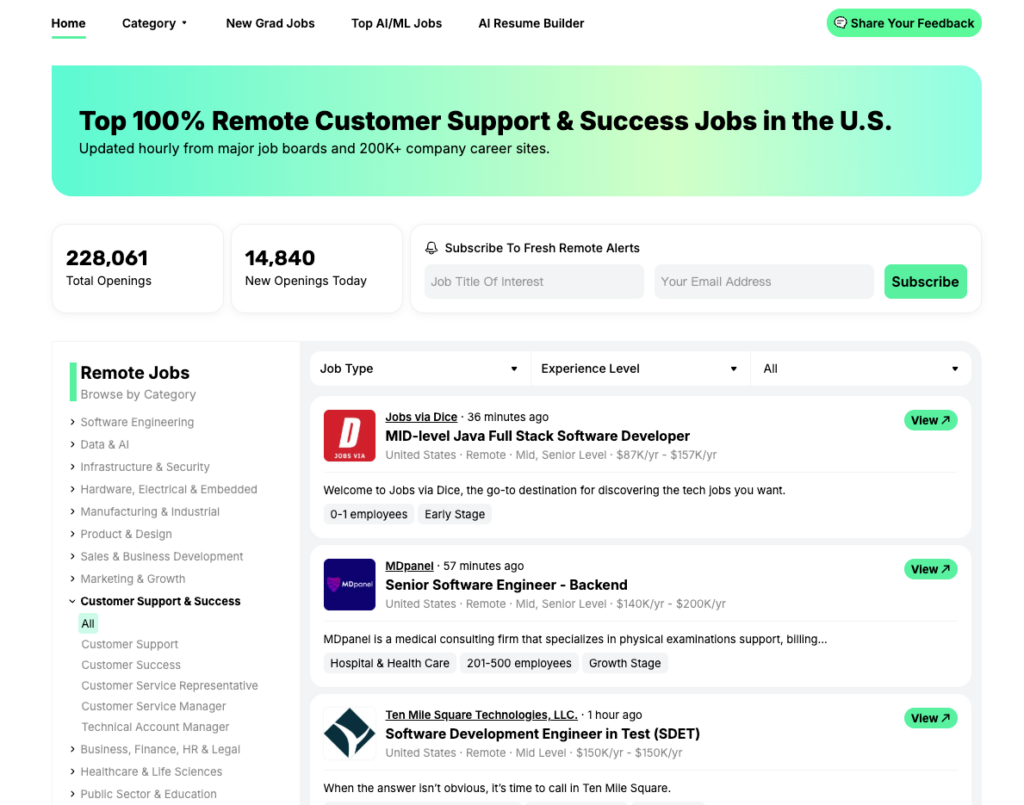
Based on 2024–2025 reports from the U.S. Bureau of Labor Statistics (BLS.gov), CompTIA, and salary reports from Levels.fyi, here’s a snapshot of three strong entry level remote paths.
Below is a simple comparison table. I’ll describe it so you can picture it even if you’re reading on a phone.
Table: Entry Level Remote Path Comparison (2026)
| Role Type | Typical Salary Range | 3-Year Growth Signal | Visa Sponsorship Likelihood |
| Remote Tech Support | $40k – $55k | +8% to +10% | Medium (large SaaS, telecom companies) |
| Junior Remote Marketing | $45k – $60k | +10% to +14% | Low to Medium (global brands, agencies) |
| Customer Success and Support | $42k – $58k | +9% to +12% | Medium to High (B2B SaaS companies) |
You can think of this table as a signal map. Salary is one signal. Growth rate is another. Visa sponsorship odds are a third, key for international candidates.
Remote Tech Support Roles: $40k–$55k Entry Level Salary
Remote tech support is not just “helping people reset passwords all day.” In many tech companies, it is the front door to higher‑paying roles like SRE, support engineering, or implementation.
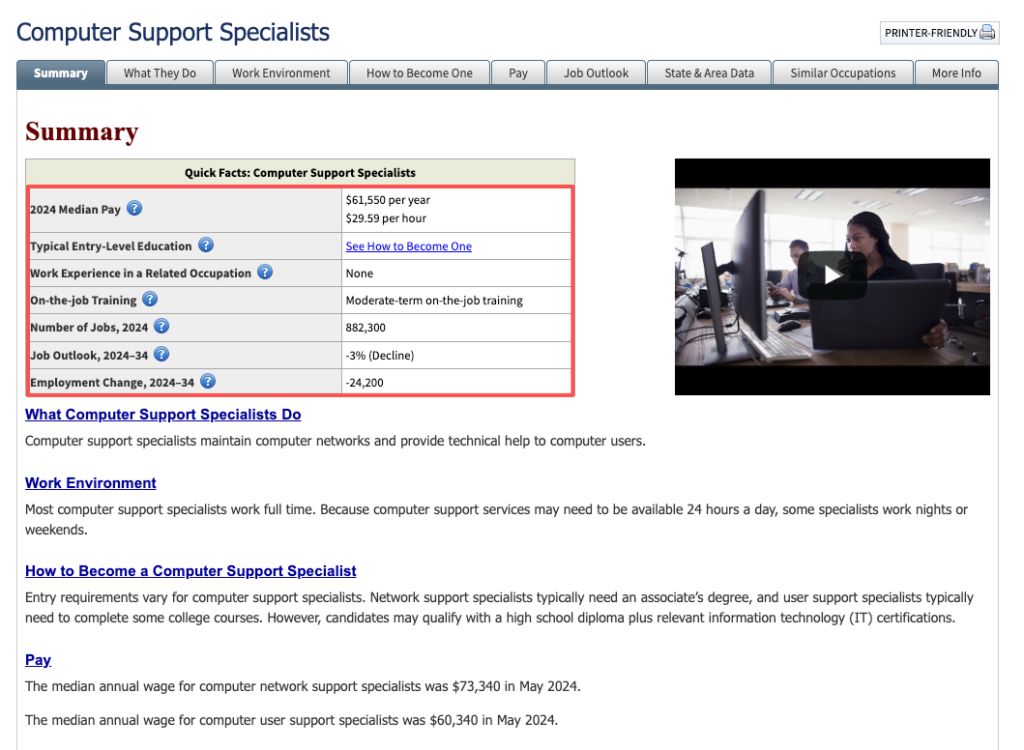
Data from the Bureau of Labor Statistics (BLS) shows the median pay for Computer Support Specialists rose to $61,550 in May 2024. While the BLS projects a slight decline in total employment due to automation, the field still forecasts over 50,000 job openings annually primarily to replace workers moving to advanced roles.
Entry-level remote roles typically land between $40k–$55k, depending on:
- Industry (telecom vs SaaS vs fintech).
- Time zone coverage.
- On-call duties.
For international job seekers, here’s the key point: Recruiters won’t tell you this, but… many companies first sponsor visas for “support engineer” or “technical specialist” roles because they map cleanly to existing SOCcodes (like 15-1232 or 15-1231) that appear in USCIS and Department of Labor (dol.gov) data.
Core ATS keywords for these roles often include:
- “Ticket triage”, “Zendesk”, “Jira”
- “SLA”, “incident”, “escalation”
- “SQL”, “API”, “debug”, “log analysis”
If your resume says “helped users with tech issues,” the ATS sees noise. If it says “resolved 20+ tickets/day in Zendesk: met 98% SLA,” the ATS sees a clear value signal.
Junior Remote Roles in Marketing: $45k–$60k
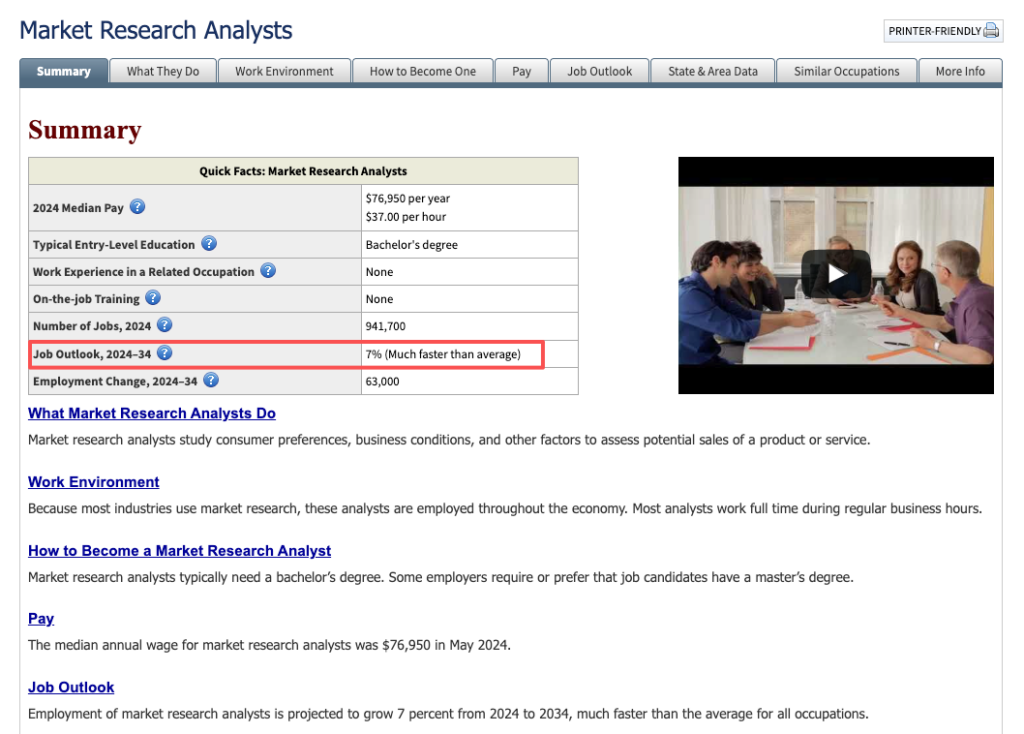
Junior remote marketing roles cover growth, paid ads, content, SEO, and lifecycle marketing. The BLS projects strong 7% growth for market research and marketing specialist roles through 2034 (much faster than average). Many teams run remote‑first because campaigns are async and data‑driven.
Salary reports from Levels.fyi and major job boards point to:
- $45k–$55k at agencies and smaller startups.
- $50k–$60k+ at well-funded SaaS or e‑commerce companies.
Here’s the harsh truth: “I like social media” is a noise sentence. It has no signal. Hiring teams want proof that you can move conversion rate, signups, or pipeline.
Signal‑rich bullet examples:
- “Increased email open rate from 18% to 27% across 5 campaigns.”
- “Launched A/B tested landing page: lifted signup conversion by 14%.”
Common ATS keywords for junior remote marketing:
- “Google Analytics”, “Looker Studio”, “A/B testing”
- “CPC”, “CTR”, “conversion rate”, “funnel”
- “SEO”, “keyword research”, “content calendar”
For visa‑dependent candidates: Many agencies do not sponsor. Analysis of H‑1B Disclosure Data (dol.gov) consistently shows far more H‑1B petitions for product companies than for small agencies. Focus on bigger, global brands if you need sponsorship.
Customer Success & Support: $42k–$58k (Entry Level Jobs Remote)
Customer success and support roles sit right at the intersection of tech, business, and empathy. Many SaaS companies run these teams globally and remote.
Using Levels.fyi and public salary bands from companies like HubSpot and Salesforce, entry level remote salaries often fall between $42k–$58k.
Why this path is strong:
- High retention for companies → they invest in customer‑facing teams.
- Clear path into account management, sales engineering, or product.
- Many US companies with global clients sponsor visas for these roles.
Signal keywords for ATS in customer success:
- “Customer onboarding”, “NPS”, “CSAT”, “churn”
- “Playbooks”, “health score”, “renewals”
- “Escalation”, “cross‑functional”, “product feedback loop”
Picture a simple bar chart: three bars, one for each path. Height = expected growth through 2028. Marketing is highest, then customer success, then tech support. All three bars are above zero. That means all three paths have positive growth, but your choice should match your skills and visa needs.
Remote Jobs for Graduates: Which Roles to Target vs. Scams to Avoid
If you’re a new grad, you might feel pressure to apply to any entry level remote job you see. That’s how people end up in unpaid “internships,” fake crypto “analyst” roles, or commission‑only sales.
Here’s the harsh truth: some of these “offers” hurt your future more than a gap on your resume.
Roles Worth Targeting as a First Remote Job
Look for roles that:
- Build transferable skills (data, systems, customer insight).
- Have clear career ladders (L1 → L2 → senior, etc.).
- Show up in DOL wage and H‑1B data, which hints at sponsorship.
Strong entry level remote targets:
- Technical Support Specialist / Support Engineer
- Signal: metrics like “tickets closed”, “time to resolution”.
- Clear link to engineering, DevOps, or SRE paths.
- Customer Success Associate / Customer Support Specialist
- Signal: NPS, churn, renewals, expansion revenue.
- Paths into account management, product, or operations.
- Marketing Coordinator / Growth Assistant / SEO Analyst
- Signal: CTR, CPC, MQLs, signups, trials, deals influenced.
- Paths into growth PM, product marketing, or analytics.
- Operations / Data Operations / RevOps Assistant
- Signal: process improvement, dashboards, reporting.
- Strong bridge into data analytics or biz ops.
Remote “Jobs” to Treat as Red Flags
Stop doing this immediately if you care about your time:
Do not keep applying to every remote role that:
- Has no base salary (commission‑only “BDR” or “lead gen”).
- Asks you to pay for training, equipment, or certification before you start.
- Refuses to list the company name or gives only a Gmail address.
- Pushes crypto, “signals groups”, or day trading as the main activity.
Data from the FTC (ftc.gov) shows a spike in job scam reports during remote hiring waves. If a role promises high pay with zero clear metrics, that’s pure noise.
Quick Scam Filter Framework (Signal vs Noise)
Ask yourself three questions:
- Can I name the core metric of success in this role?
If not, there is no clear signal. Walk away.
- Can I find the company on LinkedIn, Glassdoor, or Crunchbase?
If headcount is “1–10” with no profiles, be cautious.
- Does this role show up in DOL wage data or H‑1B disclosure lists?
If not, it might not support growth or sponsorship.
Remote work is not the risk. Lack of signal is.
Must-Have ATS Keywords for Entry Level Remote Jobs (Role-Specific Checklist)
Your resume likely fails the “ATS Stress Test” right now. That means:
- Keyword match under 60–70%.
- Formatting that breaks parsing (tables, text boxes, icons).
- Fluffy bullets with no metrics.
I aim for 80%+ keyword match on major job boards with zero parsing errors. That’s the bar.
Stop guessing. Let’s look at the data.
Most ATS systems score keyword alignment before a human reads anything. They scan for role titles, skills, tools, and metrics.
Below is a “diagram” of how I think about ATS optimization:
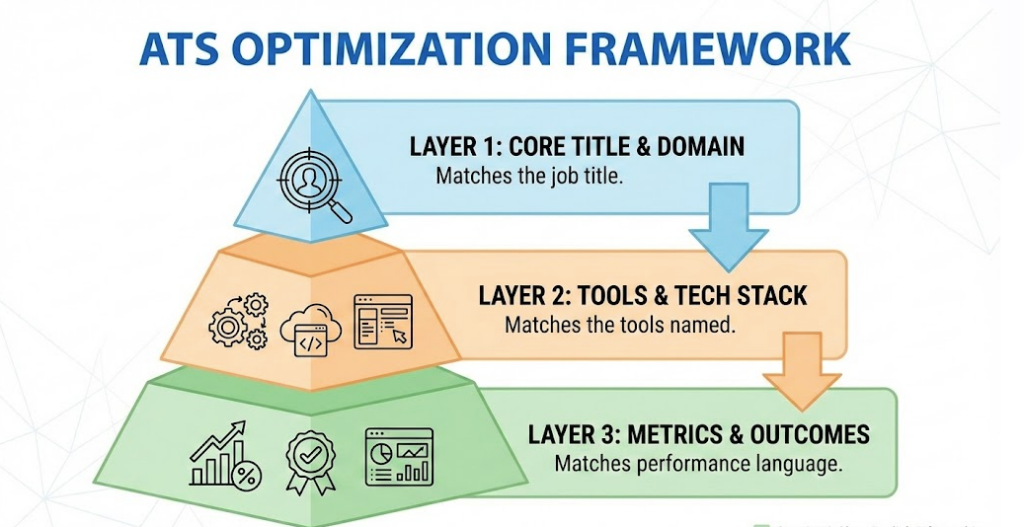
If any of these layers are missing, your signal drops.
Remote Tech Support – ATS Keyword Checklist
Use a simple, clean PDF or .docx with no columns or graphics. Then add role‑aligned keywords like these (only if honest):
- Role & domain: “Technical Support”, “Support Engineer”, “Help Desk”, “SaaS”.
- Tools: “Zendesk”, “Freshdesk”, “Jira”, “Confluence”, “Salesforce”.
- Concepts: “SLA”, “ticket triage”, “incident”, “root cause”, “escalation”.
- Tech: “SQL”, “REST API”, “logs”, “debug”, “Linux”, “Windows”.
- Metrics: “first response time”, “resolution time”, “CSAT”.
Sample bullet with signal:
“Resolved 30+ SaaS support tickets/day in Zendesk with 97% CSAT and 95% SLA compliance.”
Customer Success & Support – ATS Keyword Checklist
- Role & domain: “Customer Success”, “Customer Support”, “Account”, “SaaS”.
- Concepts: “onboarding”, “adoption”, “renewals”, “churn”, “expansion”.
- Metrics: “NPS”, “CSAT”, “retention”, “ARR”, “MRR”.
- Process: “playbooks”, “health score”, “escalation”, “feedback loop”.
Sample bullet:
“Managed 60+ SMB accounts: improved product adoption by 18% and held churn under 5% YoY.”
Junior Marketing – ATS Keyword Checklist
- Channels: “SEO”, “SEM”, “email”, “paid social”, “content marketing”.
- Tools: “Google Analytics”, “Looker Studio”, “HubSpot”, “Marketo”, “Mailchimp”.
- Metrics: “CTR”, “CPC”, “ROAS”, “conversion rate”, “MQL”.
- Skills: “A/B testing”, “keyword research”, “funnel”, “landing page”.
Sample bullet:
“Built and A/B tested 3 landing pages: raised signup conversion rate from 3.1% to 4.0%.”
Extra Tips for International Candidates (Visa‑Aware ATS Strategy)
If you need sponsorship:
- Include “H‑1B” and “visa sponsorship” in a short summary line (many recruiters filter for this).
- Mention “F‑1 OPT” or “STEM OPT” so employers know your timeline (match it with USCIS rules on uscis.gov).
- Target companies that appear often in H‑1B LCA data for the roles you want.
Your goal is simple: turn your resume from a wall of text into a keyword‑dense, metric‑rich signal the algorithm can parse in under a second.
Your 7-Day Strategy to Land Entry Level Jobs Remote (Batching & Follow-Up)
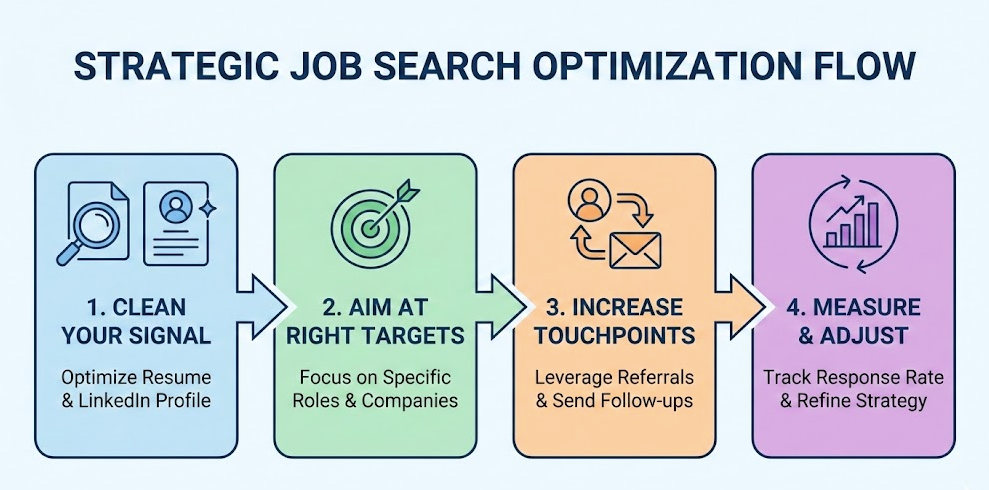
Now I’ll move from diagnosis to action. You don’t need a 6‑month reinvention. You need one focused week to reset your strategy.
Here is a process diagram:
Day 1–2: Build an ATS‑Safe, Signal‑Rich Resume
- Strip columns, icons, text boxes: use a clean single column.
- Create one base resume per role type (support, success, marketing).
- From the keyword lists above, reach 80%+ keyword match for 3–5 target job posts.
- Rewrite every bullet to include action + tool + metric.
Quick test: paste your resume and a target job description into a keyword scanner (there are simple free ones). If you’re under 75% match, you still have noise.
Day 3: Align LinkedIn to Remote + Entry Level
- Headline example:
“Entry Level Customer Success | SaaS | NPS, Renewals, Onboarding | Open to Remote”.
- About section: short, data‑driven story:
“I help SaaS teams keep customers by improving onboarding and support metrics…”
- Add 3–5 keyword‑rich projects, even if they’re from school or personal work.
Recruiters won’t tell you this, but a clear headline shapes which searches you appear in, which changes your inbound opportunities.
Day 4–5: Targeted Batching Instead of Mass Applying
Here’s the harsh truth: applying to 50 roles/day with zero targeting drops your response conversion rate. You send noise: you receive silence.
Instead:
- Pick 2 role types (example: support + customer success).
- Pick 3–4 industries (SaaS, fintech, dev tools, e‑commerce).
- Batch 10–15 high‑fit applications/day only.
For each posting:
- Match title in your resume (e.g., “Customer Success Associate”).
- Mirror 8–12 exact skills/phrases from the posting.
- Add one custom bullet or line in your summary that aligns with their product.
For international candidates: cross‑check each company against H‑1B disclosure data and public visa lists. Do not spend your limited OPT time on firms that never sponsor.
You can find more H-1B visa sponsorship remote jobs opportunities on major job boards.
Day 6: Insider Connections and Light Follow‑Up
To escape the application black hole, you need insider connection, even weak ties.
Simple play:
- Apply online first (so you’re in the ATS).
- Find a team member or recruiter on LinkedIn.
- Send a short note:
“Hi [Name], I applied for the [Role] (Req # if listed). I have [X metric] from [relevant project]. If it aligns with your needs, I’d welcome a quick review of my profile.”
For visa‑dependent candidates, keep it calm and clear:
“I’m on STEM OPT through [month/year] and I’m seeking teams familiar with H‑1B sponsorship.”
Day 7: Review Metrics and Adjust
You are not just job hunting: you are running a conversion experiment.
Track a tiny table in a spreadsheet:
Columns: Day | Applications Sent | Responses | Interviews | Conversion Rate.
After 7 days:
- If your response rate is under 5%, increase keyword match and narrow roles.
- If responses are 5–10%, double down on that role type and industry.
- If you’re above 10–15%, keep the strategy and increase volume slowly.
Action Challenge (do this today):
Reading about remote jobs won’t get you hired. Action will. Here’s your one-task challenge for today:
- Pick one remote role type from this article: support, data entry/moderation, or VA.
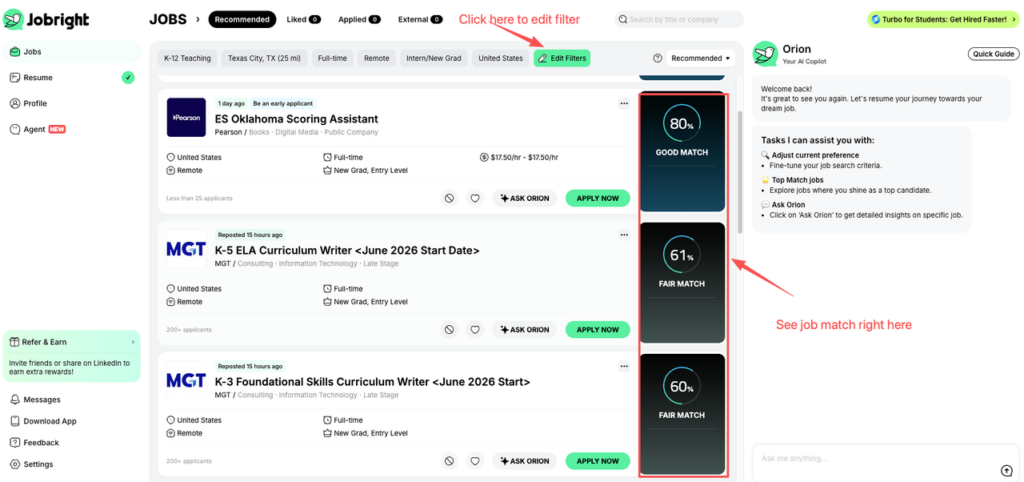
- Find the right job faster: Stop wasting hours on expired listings and scams. Use JobRight.ai to instantly filter for legitimate roles that match your specific skill set.
- Rewrite 3 resume bullets using the formula: action verb + task (with role keywords) + metric.
If you do those three actions in the next 24 hours, you’ll move from noise to signal. And that’s how entry level remote jobs stop feeling like a lottery and start feeling like a system you can control.
For location-specific opportunities, check out remote jobs in Texas or explore WFH jobs near you. If you’re just starting out, our guide on remote jobs with no experience can help you navigate your first steps.
Frequently Asked Questions About Entry Level Remote Jobs
What are the best industries for entry level remote jobs in 2026?
Strong paths for entry level remote jobs in 2026 include remote tech support, junior marketing, and customer success or support roles. These offer solid starting salaries, positive growth, and clear internal career ladders. Many SaaS and telecom companies also hire these roles globally, sometimes with visa sponsorship options.
What salary can I expect from entry level remote jobs in tech support, marketing, or customer success?
For remote tech support, typical entry level salaries range from $40,000–$55,000. Junior remote marketing roles usually pay about $45,000–$60,000, depending on company size. Customer success and support roles commonly fall between $42,000–$58,000, with higher bands at well‑funded SaaS or large B2B companies.
How can I optimize my resume for ATS when applying to entry level remote jobs?
Use a clean one‑column PDF or .docx and mirror keywords directly from target job posts. Include role titles, tools, and metrics: for example “Zendesk,” “SLA,” “A/B testing,” “NPS,” “conversion rate,” or “CSAT.” Each bullet should show action + tool + measurable outcome to boost ATS match and recruiter interest.
How do I spot scams when searching for entry level remote jobs?
Treat roles as red flags if they have no base salary, ask you to pay for training or equipment, hide the company name, or rely on vague crypto, trading, or “signals” work. Verify the company on LinkedIn and Glassdoor, and check whether similar roles appear in official wage or visa datasets.
Do I need a specific degree to get an entry level remote job?
A specific degree helps but is not always required, especially for support, customer success, and junior marketing roles. Employers care most about demonstrable skills, tools, and metrics: projects using Zendesk, SQL, or Google Analytics; or proof you improved conversion rates, retention, or customer satisfaction. Certifications and portfolios can substitute for formal majors.