
How to Cold Message on LinkedIn for an Internship (Templates That Get Replies)
Table of Contents
The “Apply” button is a lie. Okay, maybe that’s a bit dramatic—but for the modern student in 2026, relying solely on job boards is like trying to win the lottery by standing in a longer line.
The reality of internship hiring is often hidden. A significant portion of internships are never publicly advertised; they are filled through referrals, internal pipelines, and proactive students who know how to slide into a DM without being “cringe.” Networking isn’t just a buzzword; it’s the primary way the “Hidden Internship Market” operates.
Real user experiences reflect this. Take a look at discussions on r/internships, where students report landing interviews at top-tier firms not by having the perfect GPA, but by messaging professionals directly. One user noted that after 50 ignored applications, two personalized LinkedIn messages led to two interviews.
In this guide, we’re going to pull back the curtain. You’ll learn exactly how to cold message on LinkedIn for an internship, including proven templates, the psychology of a “High-Response” message, and the specific strategies used by top candidates on Jobright.ai to bypass the digital gatekeepers.
Why Cold Messaging Works for Internships
If you’ve ever felt like your resume is falling into a black hole, you’re not alone. Here is why stepping outside the application portal and into the inbox is your biggest competitive advantage.
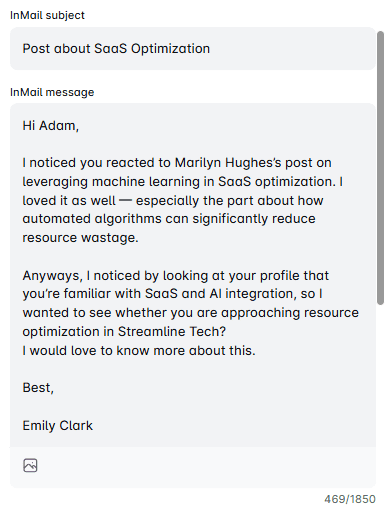
1. Accessing the Hidden Internship Market
Companies, especially startups and mid-sized firms, often have “needs” before they have “postings.” By the time an internship is listed on a job board, the recruiter is already buried under 500+ resumes. Cold messaging allows you to reach a hiring manager before the floodgates open. You aren’t just an applicant; you’re a solution that appeared before the problem became a headache.
2. Recruiter Openness to Student Outreach
Contrary to popular belief, most recruiters and team leads actually like hearing from students—provided the message is professional. It shows traits that a resume can’t capture: initiative, communication skills, and genuine curiosity. In a sea of automated applications, a human-centric message stands out like a beacon.
3. Building Long-Term Career Capital
Networking is a compound interest game. Even if a message doesn’t result in an internship today, that connection becomes part of your professional ecosystem. In two years, when you’re looking for a full-time role, that “random” recruiter you messaged as a sophomore might be the one who fast-tracks your application.
How to Cold Message on LinkedIn for an Internship (Step-by-Step Strategy)
Success on LinkedIn isn’t about the volume of messages; it’s about the precision of the strategy. Follow these five steps to ensure your outreach doesn’t get marked as spam.
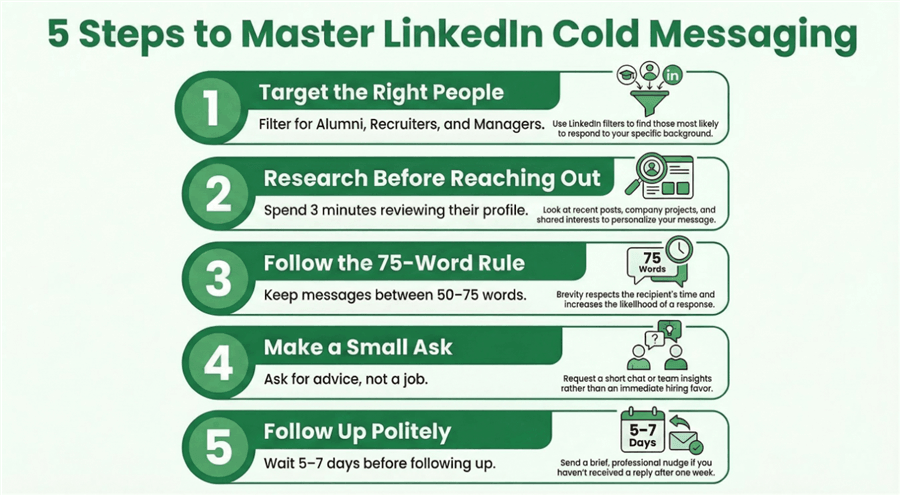
Step 1: Find the Right Person
Don’t just message the CEO of a Fortune 500 company and expect a reply. Use LinkedIn’s advanced filters to find:
- University Alumni: These are your “warmest” leads. They have a natural bias toward helping someone from their alma mater.
- Team Leads/Managers: Look for people who would actually be your boss. If you want a marketing internship, find the “Social Media Manager” or “Content Lead.”
- Recruiters: Specifically search for “University Recruiter” or “Emerging Talent Recruiter.”
Step 2: Research Before Messaging
Before you type a single word, spend three minutes on their profile.
- Did they recently post an article?
- Did their company just launch a new product?
- Do you share a mutual interest in a specific tech stack or industry trend?
Personalization is the difference between a reply and a “Delete.”
Step 3: Keep it Short (The 75-Word Rule)
The ideal LinkedIn message is between 50 and 75 words. If the recipient has to scroll to read your message, you’ve already lost. Think of it as a professional “elevator pitch” for the digital age.
Step 4: The “One Small Thing” Ask
Never ask for a job in the first message. Ask for information. A 5-minute chat, advice on a specific skill, or a quick question about the company culture are “Low-Friction” asks that are easy to say “yes” to.
Step 5: The Polite Nudge (Follow-Up)
People are busy. If you don’t hear back, wait 5 to 7 days and send a brief follow-up. “Hi [Name], I’m just bumping this to the top of your inbox. I’d still love to hear your thoughts on [Topic] if you have a moment!”
The Anatomy of a Perfect Cold Message
Every high-converting cold message follows a simple three-part psychological structure. When you understand these components, you stop “guessing” and start “engineering” your outreach.
The Trigger
The Trigger is your “reason for writing.” It proves you aren’t a bot sending mass templates. It should be a specific observation that connects you to the recipient.
- “I saw your recent post about the shift toward generative AI in UX design…”
- “I noticed [Company] is expanding its operations into the European market…”
- “As a fellow [University] alum, I’ve been following your career path in fintech…”
Purpose: To capture attention and establish immediate credibility.
The Bridge
The Bridge connects your background to the recipient’s world. This is where you establish relevance.
- “As a Computer Science student currently using Jobright to analyze hiring trends, I’ve been focusing my projects on exactly the kind of scalable architecture your team is building.”
Purpose: To show you aren’t just interested—you’re qualified to be interested.
The Low-Friction Ask
The biggest mistake students make is asking for the “whole loaf” (a job) when they should be asking for a “slice” (information).
- “Would you be open to a two-question email exchange about your team’s workflow?”
- “Would you be open to a quick 5-minute ‘coffee chat’ via Zoom?”
It lowers the “cost” of helping you. Saying yes to a 5-minute chat feels easy; saying yes to “helping me find a job” feels like a chore.
2026 LinkedIn Etiquette: Insights from the Trenches
To ensure your outreach resonates in 2026, we’ve analyzed real-world discussions from professionals on platforms like Reddit and LinkedIn. The “unwritten rules” of networking have shifted, and ignoring these cultural cues is the fastest way to get blocked.
1. The Death of the “Bait and Switch”
A major trend identified in r/datascience is the rising “Anti-Pitch” movement. Users are increasingly frustrated by the “fake coffee chat” request—where a student asks for “advice” but clearly just wants a job referral.
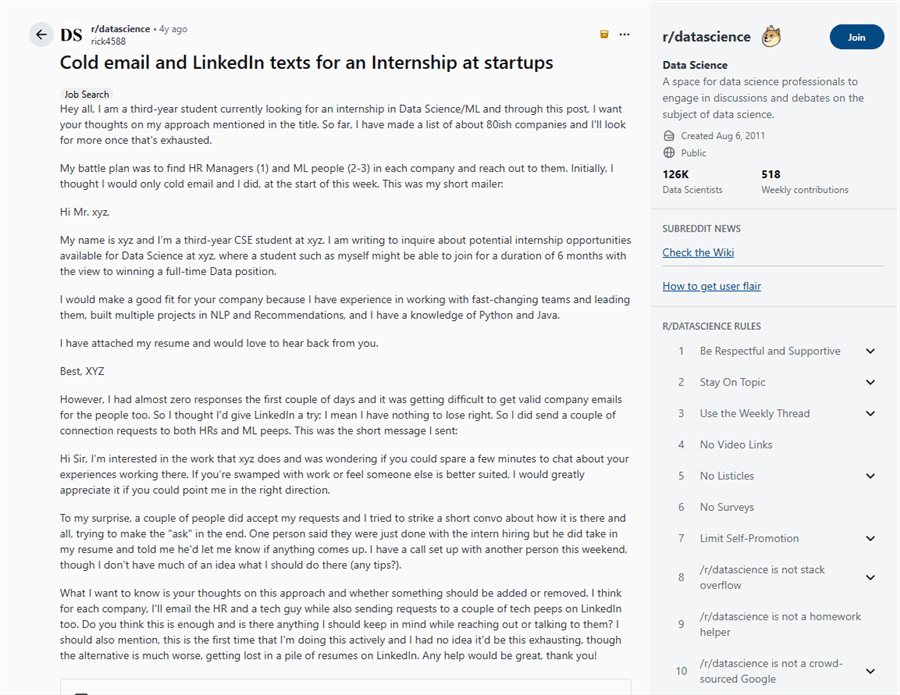
2026 Standard: Be direct. Professionals actually prefer a concise, honest request over a vague “I’d like to pick your brain” message that hides a hidden agenda.
2. The Hard 300-Character Ceiling
Data from r/jobsearchhacks confirms that attention spans are shorter than ever. If you are sending a connection request, you have a strict 300-character limit. Experts emphasize that the most successful candidates treat these 300 characters like a high-stakes elevator pitch—no fluff, just value.
3. Ditch the “Robotic” Formalism
One of the most common critiques in recent career threads is the “Sir/Madam” mistake. Using overly formal or archaic greetings (like “Dear Honorable Sir”) makes you look like a spam bot.
- The Old Way: “Dear Sir/Madam, I humbly request…”
- The 2026 Way: “Hi [Name],” followed by your specific trigger.
Humanity and personalization are your best tools to prove you aren’t an AI-generated mass mailer.
3 Cold Message Templates That Actually Get Replies
Use these templates as a baseline, but remember: The more you customize, the higher your response rate.
Template 1 — The Alumni Connection (Highest Success Rate)
Subject: Question from a fellow [University] student
Hi [Name],
I noticed you graduated from [University] and are now a [Job Title] at [Company]. As a current [Major] student there, I’ve been following [Company]’s work in [Specific Area].
I’d love to ask one quick question: What’s one skill you learned at [University] that you use most in your current role?
Thanks for your time!
[Your Name]
Template 2 — The Recruiter Outreach (The “Direct” Approach)
Subject: Internship Inquiry: [Your Major] student interested in [Company]
Hi [Name],
I’m a [Junior/Senior] at [University] specializing in [Skill]. I’ve been tracking [Company]’s growth and love the recent work you did on [Project].
Does your team typically look for interns with a background in [Your Specific Skill] for the upcoming summer? I’d love to ensure I’m on the right track for future openings.
Best,
[Your Name]
Template 3 — The Team Member/Peer Outreach (The “Curiosity” Approach)
Subject: Quick question regarding [Project Name]
Hi [Name],
I recently saw the update your team pushed for [Product/Project]. As a student currently building a project in [Related Skill Area], I was curious about how your team handles [Specific Technical Detail]?
If you have 30 seconds to reply, I’d love to hear your perspective.
Best,
[Your Name]
How Jobright.ai Helps You Get More Internship Replies
Here’s an uncomfortable truth about LinkedIn outreach: when someone receives your message, the first thing they do is click your profile.
Your message is the ad, but your LinkedIn profile is the landing page. If your message is thoughtful but your profile looks incomplete, unfocused, or irrelevant to the role, recruiters are far less likely to reply.
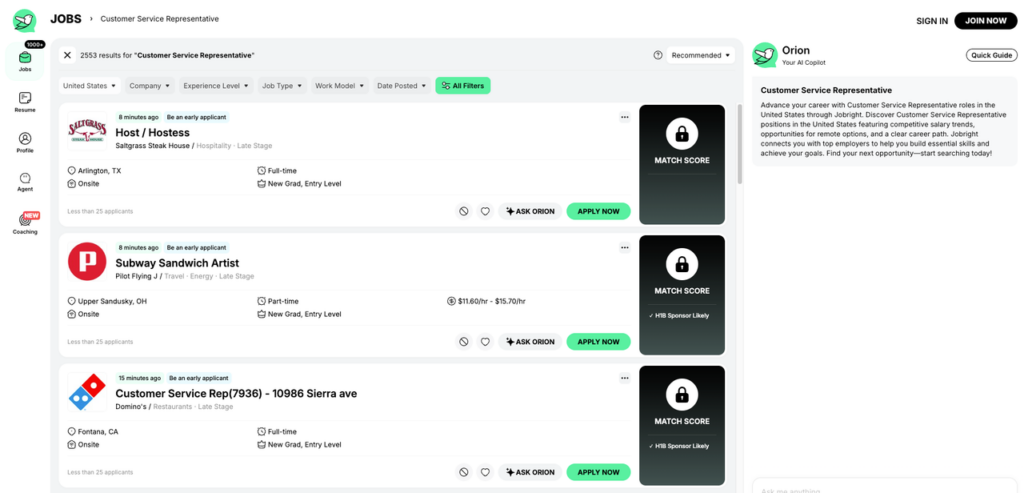
Profile Optimization
Jobright analyzes keywords from real job descriptions and highlights the skills recruiters expect. It helps you incorporate those signals into your resume and LinkedIn profile so your experience aligns with what employers are actually searching for.
Resume–Job Match Analysis
Before reaching out to someone about an internship, Jobright can compare your resume with the job description and generate a Match Score. This helps you quickly identify skill gaps and improve your positioning before you start networking.
Smarter Role Targeting
Instead of messaging randomly, Jobright highlights roles where your skills show the strongest match, helping you focus your outreach on opportunities where you are most competitive.
When your profile already reflects the skills recruiters expect, your message feels more credible. You’re no longer just a student asking for help—you look like a candidate who is genuinely prepared for the role.
A Cold Messaging Strategy That Actually Works: The “Weekly 20”
Networking is a marathon, not a sprint. To see real results, you need a consistent system. We recommend the Weekly 20 Strategy:
| Segment | Target Count | Goal |
| Recruiters | 5 Messages | Find out about hiring timelines. |
| Team Members | 10 Messages | Understand the daily “grind” and culture. |
| Alumni | 5 Messages | Get high-level career advice and “warm” leads. |
By the end of a month, you will have sent 80 targeted, high-quality messages. Even with a conservative 10% response rate, that’s 8 professional conversations you didn’t have before.
Frequently Asked Questions
Should I cold message recruiters on LinkedIn for internships?
Absolutely. Recruiters are literally paid to find talent. A well-crafted message makes their job easier. Just ensure your message is focused on how you can help them, not just how they can help you.
How long should a LinkedIn cold message be?
The sweet spot is 50–75 words. You want to be long enough to show you’ve done your research, but short enough to be read in under 15 seconds.
When should I follow up if I don’t get a reply?
Wait 5 to 7 days. If they haven’t replied by then, they’ve likely forgotten. A single, polite follow-up is professional; a second follow-up usually starts to feel like spam.
Do I need LinkedIn Premium to cold message?
Not necessarily. You can send “Connection Requests” with a 300-character note for free. However, if you are serious about a high-volume outreach strategy, LinkedIn Premium (or using Jobright to find direct emails) can be a worthwhile investment.
Conclusion
Cold messaging is a skill that only gets better with practice. Don’t wait for the “perfect” moment—start today by picking three companies you admire and reaching out to one alum at each. Consistent, personalized outreach is the fastest way to turn a cold inbox into a warm internship offer.