
Medical Assistant Remote Jobs: What’s Real and What Isn’t
Table of Contents
You’ve been scrolling through endless job boards searching for medical assistant remote jobs, hoping to swap the clinic commute for a home office. I get it—landing legitimate medical assistant work from home jobs is the ultimate goal for many burnt-out healthcare workers. As a career strategist analyzing job markets, I review thousands of job searches, and I constantly see MAs getting frustrated by the application black hole. You apply for what looks like a dream remote clinical role, only to discover it’s just a glorified call center gig. The truth is, securing these roles requires knowing exactly how employers hide the real duties behind flashy titles. I’ve dug into the ATS data and tested the application process to see what actually works. If you’re tired of guessing, let’s break down what’s real, what’s fake, and how to get your resume noticed.
Key Takeaways
- Medical assistant remote jobs are real, but they usually focus on scheduling, patient communication, documentation, referrals, and other digital workflow tasks instead of hands-on clinical care.
- To find better-fit medical assistant remote jobs, read the duties before the title and confirm the role matches your EMR experience, credential level, and true remote status.
- Employers hire faster when candidates show strong healthcare communication, clean documentation, accuracy, and the ability to keep patient workflows moving without errors.
- If you want medical assistant work from home jobs, move Epic, Cerner, eClinicalWorks, or Athenahealth experience near the top of your resume and back it up with measurable results.
- Broaden your search with terms like virtual medical assistant jobs, remote patient support jobs, care coordinator, and patient service roles to uncover more relevant openings.
- Tailor every application to the posting keywords and prove direct workflow fit, because alignment matters more than the job title in remote healthcare hiring.
Can Medical Assistant Jobs Really Be Remote?
Yes, but usually only part of the medical assistant role can go remote.
I tell job seekers this all the time: job titles can mislead you. A posting may say virtual medical assistant jobs, but the daily work often looks more like patient messaging, intake support, scheduling, referrals, chart prep, or documentation follow-up. Recruiters won’t tell you this, but the title matters less than the task list.
According to MGMA research on remote and hybrid work trends, flexible work arrangements in healthcare are no longer temporary accommodations—they’ve become a permanent fixture in how medical practices operate. That shift has directly expanded the number of digital-first MA roles available.
What parts of the role can move online
The parts that work well from home are the tasks that happen inside phone systems, patient portals, and EMR platforms. That includes confirming appointments, handling prior authorizations, routing patient questions, reviewing forms, checking insurance details, and supporting provider workflows.
Some employers also hire MAs for remote patient outreach. These remote patient support jobs may include post-visit calls, care coordination, refill requests, and helping patients complete basic next steps. The common thread is simple: if the task depends on communication, systems access, and accuracy, not physical contact, it has a shot at being remote.
Why many “remote MA” jobs are support-heavy instead of clinical
A standard MA role includes vitals, rooming patients, injections, specimen handling, and in-person assistance. Those tasks don’t survive a remote setup. That’s why so many healthcare assistant remote jobs lean hard toward support work.
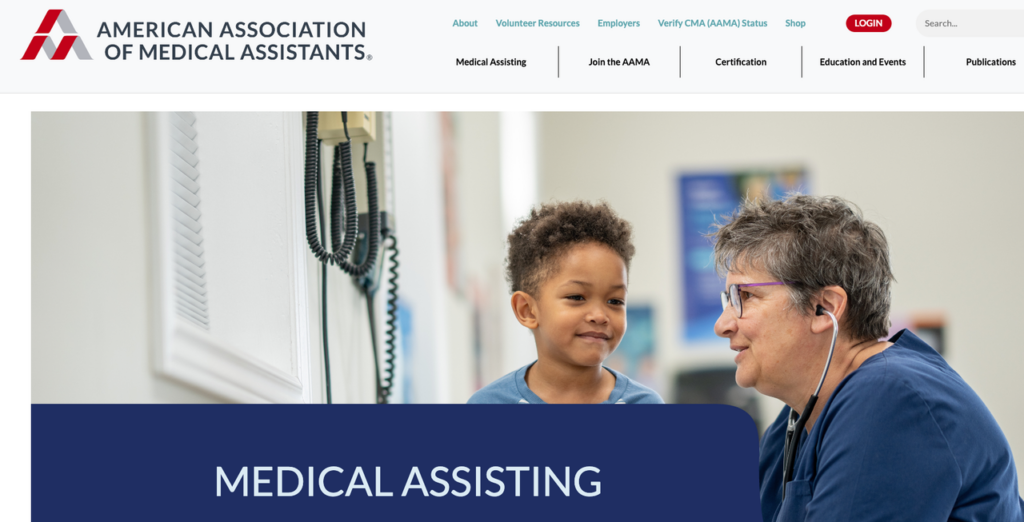
To understand the full scope of what medical assistants do across all work settings, it helps to see how the profession itself is defined—both the clinical and administrative sides of the role translate very differently into remote environments.
Think of it like splitting one role into two buckets. One bucket is clinical and hands-on. The other is digital and process-driven. Remote hiring focuses on the second bucket because that’s where employers get clear ROI: faster response times, tighter workflow, better patient communication, and fewer dropped tasks.
The Main Types of Medical Assistant Remote Jobs
If you search broadly, you’ll see a messy mix of listings. Some are true MA-adjacent roles. Others are rebranded call center jobs. Alignment matters.
Patient support, coordination, and scheduling roles
This is the most common lane. These jobs often involve answering patient calls, sending portal messages, scheduling visits, coordinating referrals, managing follow-ups, and helping with intake steps.
In practice, many medical assistant remote jobs sit close to front-desk operations with stronger clinical context. You may need to understand symptoms, visit types, medication names, or basic care pathways, but you usually won’t perform direct care. If you’ve worked in a busy clinic, this kind of work may feel familiar.
Documentation and workflow support roles
The second lane is documentation-heavy. That can include chart preparation, updating records, processing orders, handling inbox tasks, reviewing gaps in patient files, and helping providers keep workflows moving.
Some employers blend these duties with scribing or referral coordination. Others want someone who can move through the EMR fast and catch errors before they become patient delays. These medical assistant work from home jobs often reward people who are calm, organized, and precise under pressure.
What Employers Usually Look For
Here’s where many applicants miss the mark. They focus on the title and ignore the mechanism behind the hiring decision.
Clinical familiarity, communication, and accuracy
Most employers want someone who understands healthcare language, patient expectations, and basic clinic workflow. You don’t always need advanced credentials beyond what the role lists, but you do need enough clinical familiarity to avoid mistakes.
Communication matters more than many people think. A remote MA may spend most of the day on calls, messages, or task routing. That means your value prop is not just “I worked in healthcare.” It’s “I can communicate clearly, document cleanly, and keep patients moving through the system without friction.”
Accuracy is huge. One wrong note, one missed callback, one referral error, that can affect patient care. That’s why employers often screen for detail orientation and reliability before anything else.
Why EMR and patient workflow experience matter
If you have EMR experience, move that near the top of your resume. ATS systems often parse for platform terms, workflow language, and keyword match tied to healthcare operations. Optimization matters here.
I’d highlight systems like Epic, Cerner, eClinicalWorks, or Athenahealth if you’ve used them. Also quantify your work when possible: patient volume, scheduling load, inbox metrics, turnaround time, or documentation accuracy. Data-backed bullets tend to improve conversion rate because employers can picture your impact faster.
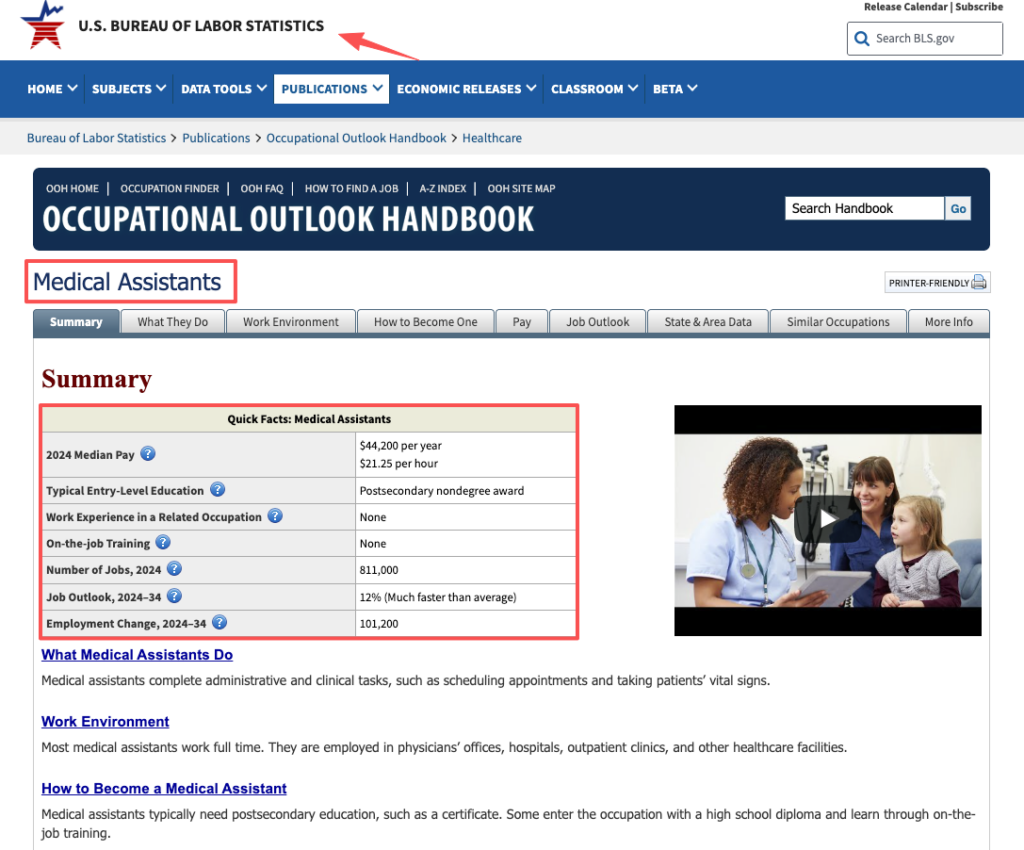
For broader context on digital health workflows, the Office of the National Coordinator for Health IT outlines the core benefits of EHR systems — understanding these advantages helps you speak the employer’s language when positioning your EMR experience in interviews and cover letters. The U.S. Bureau of Labor Statistics medical assistants occupational outlook also tracks salary benchmarks, job growth projections, and the full range of duties that define the profession nationally.
Where to Find Better-Fit Medical Assistant Listings
The best listings are usually the ones that describe the workflow clearly, not the ones with the flashiest title.
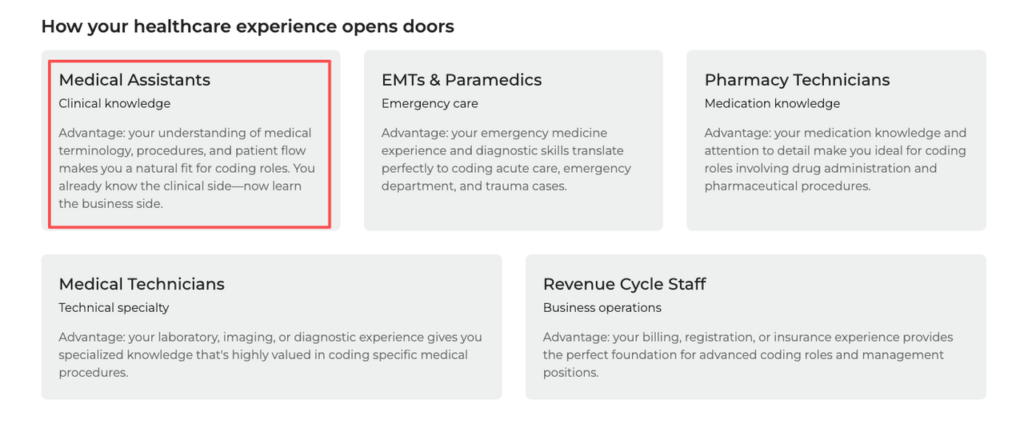
Look at large health systems, telehealth groups, specialty practices, care coordination teams, and insurance-connected provider networks. If you’re also thinking about adjacent paths, reviewing healthcare career progression options for clinical support workers can help you identify roles that align with your existing credentials and open new directions beyond the standard MA title.
Search beyond one keyword. Try remote medical assistant jobs, virtual medical assistant jobs, remote patient support jobs, and care coordinator or patient service terms too.
How to tell whether a listing matches your background
Start with the duties, not the headline. For example, if you review this live remote medical assistant scheduling role, you’ll notice the daily work is clearly outlined before the requirements. If the posting is mostly phones, scheduling, documentation, and portal work, it may be a fit for someone with clinic admin plus MA experience. If it asks for triage, high-level case management, or nursing judgment, that’s probably not the right lane.
Check for three things:
- System alignment: Does it ask for EMR, inbox management, referrals, or patient scheduling you’ve done before?
- Credential alignment: Is it asking for an MA certification, or quietly expecting an LPN/RN background?
- Remote reality: Does it say fully remote, hybrid, or remote after training?
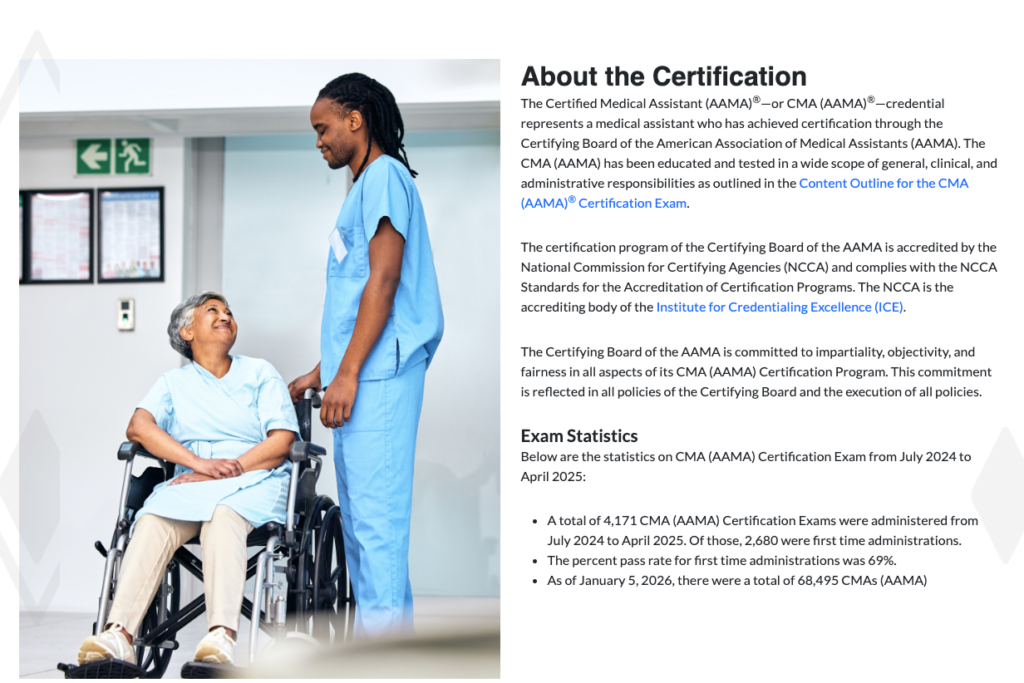
On the credential question specifically, understanding what the CMA (AAMA) certification actually covers and requires helps you assess whether a posting’s credential expectations are standard MA scope or whether they’re quietly asking for something beyond the role.
Here’s the harsh truth: if you spray applications without checking these details, ATS rejection is almost guaranteed. Tailor your resume to the posting’s keywords, keep the title language close to the listing, and show direct evidence of workflow fit.
Final Take
Who medical assistant remote jobs suit best
These roles fit people who like structure, clear processes, patient communication, and digital workflow more than hands-on clinical care. If you were the MA who kept the clinic organized, caught chart errors, and helped patients get unstuck, remote work may suit you well.
They’re also a smart option for people who need flexibility, though competition is strong. And if you’re changing location or need a more stable schedule, this path can make sense.
What to check before you apply
Before you apply, verify the real work, the software stack, the credential requirements, and whether the role is truly remote. Then adjust your resume for ATS parsing and keyword match. Lead with EMR experience, patient communication, scheduling, documentation, and measurable metrics.
Recruiters won’t tell you this, but titles don’t get interviews, alignment does. If you target the right listings and show direct workflow evidence, you’ll have a far better shot at landing the right medical assistant remote jobs instead of wasting weeks in the application black hole.
Now that you know exactly what employers look for in remote medical assistants, it’s time to put that knowledge to work. We created Jobright.ai to match your unique clinical background with vetted remote roles. Try Jobright.ai for free and start applying with confidence.
Frequently Asked Questions
Are medical assistant remote jobs real, or are they mostly misleading titles?
Medical assistant remote jobs are real, but they usually cover only the digital side of the role. Most work-from-home positions focus on scheduling, patient messaging, documentation, referrals, and EMR tasks rather than hands-on duties like vitals, injections, or rooming patients.
What do medical assistant work from home jobs usually involve day to day?
Most medical assistant work from home jobs center on patient support and workflow coordination. Daily tasks often include answering calls, sending portal messages, confirming appointments, checking insurance, processing referrals, preparing charts, and helping providers manage inboxes and follow-up tasks.
What skills do employers want for medical assistant remote jobs?
Employers usually want clinical familiarity, strong communication, attention to detail, and solid EMR experience. For medical assistant remote jobs, it helps to show you can document accurately, manage patient workflows, handle high message volume, and work reliably without close in-person supervision.
How can I tell if a remote medical assistant job matches my background?
Start with the task list, not the title. A good match usually asks for experience with scheduling, referrals, patient communication, inbox management, and EMR systems. If the posting expects triage, nursing judgment, or advanced case management, it may be outside standard MA scope.
Do I need certification to get virtual medical assistant jobs?
It depends on the employer and the exact role. Some virtual medical assistant jobs require MA certification, while others prioritize clinic experience, EMR knowledge, and patient communication skills. Always check whether the posting expects an MA, LPN, or RN background before applying.
Recommended Reads