
Remote Part-Time Jobs: Realistic Schedules + Scam Warning Signs
Table of Contents
Last Updated: January 27, 2026 · Applicable to 2026 hiring season
You’ve searched “remote part time jobs” three times this week, and sent out quite a lot of applications, but you’ve heard back from exactly zero companies. Sound familiar?
Here’s the harsh truth: most remote part-time listings are either scammy, underpaid, or so generic that your application disappears into the application black hole.
I’m Dora, in this guide, I’m going to do three things for you:
- Map out legit remote part-time jobs by schedule (morning, evening, weekends).
- Show you normal pay ranges vs. red-flag pay using real data.
- Give you plug-and-play application templates plus a batching strategy that survives ATS parsing and boosts your response rate.
Stop guessing. Let’s look at the data and strip out the noise so your signal stands out.
Best Remote Part-Time Jobs by Schedule & Flexibility
Most tech pros don’t need any remote part-time job. You need one that fits your energy, time zone, and visa or full-time search constraints.
Think in signals vs. noise:
- Signal: Clear schedule, clear metrics, clear pay, clear employer.
- Noise: Vague “work from anywhere” promises, no company name, no defined scope.
I’ll break this down by time of day so you can filter faster.
Morning Remote Jobs (6am–12pm): Legit Roles That Actually Hire
If you’re in the US and interviewing for full-time roles, morning remote part-time work can free up afternoons for interviews. For international candidates on OPT/CPT, consistent early hours can align with employer reporting and class schedules.
Based on current postings from Indeed and curated boards like FlexJobs and Remote.co, here are common legit morning remote part-time roles in tech-adjacent work:
Typical morning-friendly roles
- Data annotation / labeling
- Example: DataAnnotation.tech periodically hires part-time for ML training tasks.

- Work: Labeling images, text, or code snippets: following strict guidelines.
- Signal: Clear task instructions, pay per task or per hour, short trials instead of unpaid “training marathons.”
Customer support (technical SaaS)
- Example: US-based remote work providers often post part-time tech support roles on Indeed’s remote part-time search.
- Work: Answering tickets or chats: following runbooks.
- Signal: Defined hours, clear ticket volume expectations.
Content moderation / community support
- Example: ModSquad.
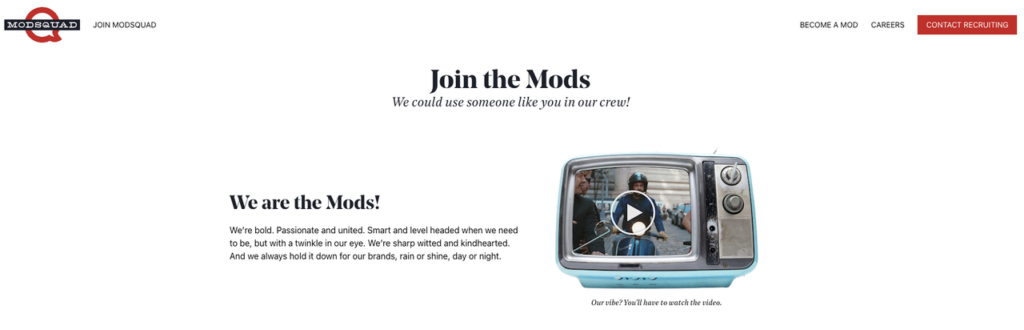
- Work: Moderating forums, in-app chat, or social channels for tech products and games.
When I scan a morning role, I ask three data-backed questions:
- Is there a named company or clear hiring vendor?
Anonymous Gmail + vague brand = noise. 2. Is pay stated by hour or task with real numbers?
“Up to $50/hour” without a floor is often bait. 3. Are tasks measurable?
Number of tickets per hour, number of items labeled. If I can’t quantify performance, I can’t judge ROI on my time.
Remote Evening Jobs & Weekend Remote Work: Who They’re Best For
Evening and weekend remote part-time jobs are popular with:
- Full-time tech workers wanting extra income.
- International students working within visa limits and class schedules.
- Candidates in time zones misaligned with US daytime.
From FlexJobs’ remote part-time listings and long-running companies like Working Solutions and ModSquad, I see the same pattern of roles pop up:
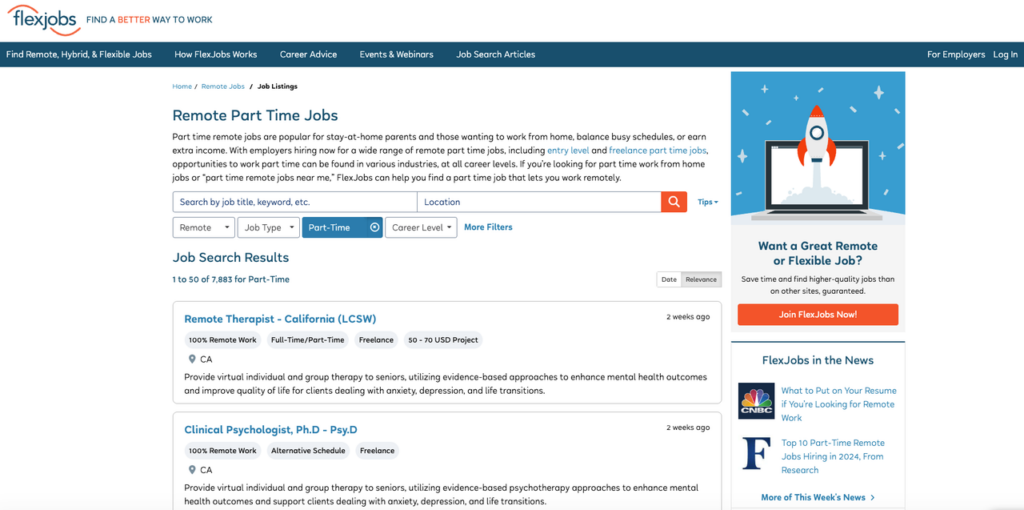
Common evening/weekend remote roles
User research / usability testing
- Sessions often run evenings or weekends to match user availability.
- Signal: Scheduled sessions, consent forms, and clear per-session compensation.
Online instruction / course support
- For example, helping run coding bootcamp office hours or grading assignments.
- Signal: Reputable school/bootcamp name, defined syllabus, contracts.
Specialist customer experience roles
- Payment disputes, incident triage, or trust & safety.
Here’s where I’m blunt: if you’re in tech and your skills include coding, data, or product thinking, you should aim for roles that leverage those skills, not generic survey farms. Surveys pay cents, not careers.
Mini before/after scenario:
- Before (noise-heavy):
You grab any weekend “remote part time job” you see on a generic board. It pays $6/hr effectively, offers no skill signal, and eats all your interview prep time.
- After (signal-focused):
You target data annotation, QA, or research work. You include it as measurable experience on your resume: “Labeled 2,000+ samples with 98% accuracy for ML pipeline: improved model F1 score by 3 points.” This builds a story for future interviews.
Recruiters won’t tell you this, but the right remote part-time role can double as a portfolio project if you frame the metrics correctly.
Part-Time Remote Job Pay: What’s Normal vs What’s a Red Flag
Let’s anchor expectations, because sketchy pay is where many remote part time jobs cross into scam territory.
I pull from three data sources when I benchmark:
- U.S. Bureau of Labor Statistics for baseline occupation wages.
- Remote job boards like FlexJobs and Indeed.
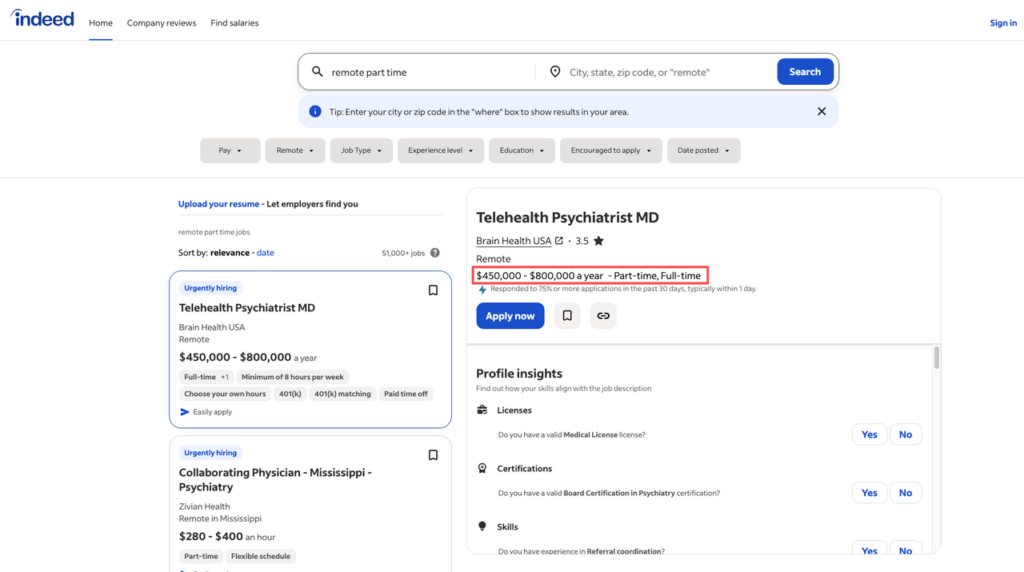
- Levels.fyi / market comp data for context on tech wage floors.
Stop guessing. Let’s look at the data.
Rough pay bands you should expect (US-based roles)
Here a simple pay-band table:
| Role Type | Typical Pay Band |
| General remote customer support | $13–$20 per hour |
| Technical support / SaaS support | $18–$30 per hour |
| Data annotation / data entry with quality metrics | $15–$28 per hour |
| Specialist roles (QA testing, UX research help, coding-related tasks) | $25–$60 per hour, part-time or per project |
Numbers move with location and classification (contract vs W-2), but these ranges match what I see on vetted sites and in BLS occupational data.
Red flags in pay and structure
Here’s the harsh truth: if it sounds too high or too vague, it’s almost always noise, not signal.
Red flags I refuse to ignore:
- Unclear pay structure
“Earn up to $3,000 a week.” with no hourly equivalent or sample workload. Data from the FTC shows that inflated income claims are a common pattern in work-from-home scams.
- Pay contingent on recruiting others
If you earn more from “signing up people” than from actual work, that’s a pyramid-style structure, not a job.
- Complex fee logic
You shouldn’t pay for “starter kits,” “admin fees,” or “access packages.” The FTC explicitly warns about this in its guide on avoiding work-from-home job scams.
- Huge pay for low-skill, no-screening work
“No experience, 100% remote, $80/hr data entry.” While BLS shows growth in remote work, pay for low-skill admin work doesn’t suddenly 5x because it’s online.
For international candidates (visa-dependent)
If you’re on F-1 OPT/CPT or targeting H-1B, you need to think beyond hourly pay:
- The U.S. Department of Labor and LCA wage data set realistic wage floors for specialty roles, if a part-time contract rate is far below those levels, it won’t help your long-term sponsorship story.
- For H-1B, your future employer must meet or exceed the prevailing wage: doing months of $12/hr “developer” work sends the wrong signal.
In short: part-time contracts can be tactical, but don’t anchor your value prop at wages that undercut your H-1B case later.
Recruiters won’t tell you this, but lowballing yourself now gives hiring managers a justification to anchor low offers later.
Part-Time WFH Scams Explained: Common Patterns in Remote Listings
You’re not paranoid. Scam listings for “remote part time jobs” exist on every platform.
According to the FTC and fraud awareness resources like Remote.co’s fraud guide and FlexJobs’ scam breakdown, the same patterns show up again and again.
The 5-pattern scam checklist
Before I apply, I run a quick signal vs. noise scan:
- Upfront money requirement
- “Pay for certification kit.”
- “Wire us funds to unlock your account.”
Data-backed: the FTC flags “pay to get hired” as one of the top signals of a fraudulent job offer.
- Vague company identity
- No company website, or a website with no employee LinkedIn presence.
- Generic Gmail or encrypted email instead of corporate domain.
If I can’t map a job to a verifiable entity, I treat it as noise.
- Pressure + speed
- “You must accept today.”
- “Skip interview, we’ll pay immediately.”
Legit employers (including part-time shops like DataAnnotation.tech, ModSquad, and Working Solutions) still screen and often test skills. If someone is rushing you to share personal data, that’s a red flag.

- Payment via gift cards, crypto, or checks you must “re-ship”
- The FTC repeatedly cites fake check and gift-card schemes in work-from-home scams.
- Normal remote employers pay via payroll or common payment platforms, not via gift cards.
- Zero clarity on actual tasks
- “You’ll help brands grow online.” But how?
- No daily metrics, no tools mentioned, no example tasks.
Remember our core metaphor: work should generate clear value signals you can describe later. If you can’t articulate what you’ll do, don’t sign anything.
Quick diagram: Safe vs. sketchy listing flow
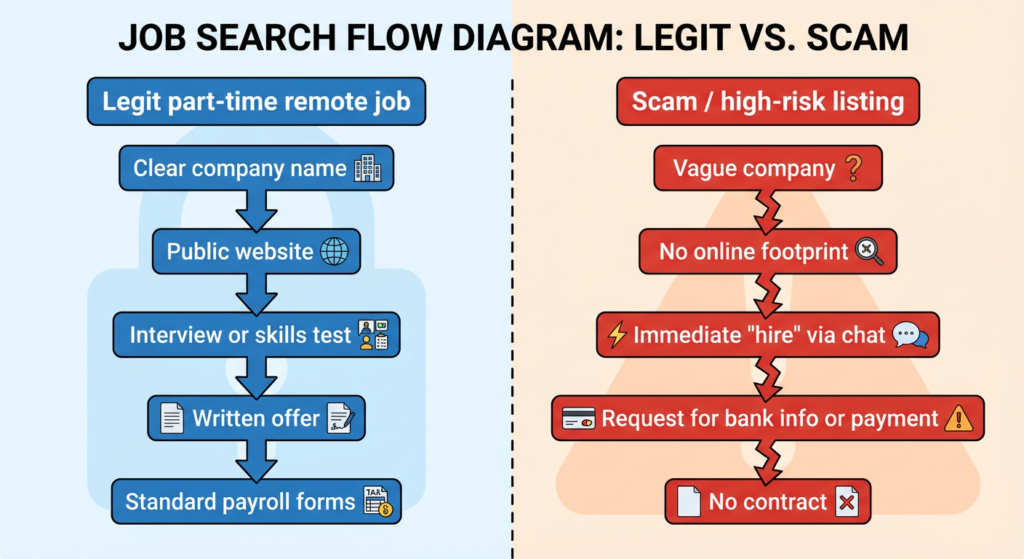
At each fork, ask: Does this step exist in normal employment flows I’ve seen before? If not, pause.
Here’s the harsh truth: if you’re desperate for remote income, scammers can see that signal. Your defense is process, not vibes.
I always cross-check with:
- Company name + “scam” on search.
- Better Business Bureau or equivalent.
- Any mention on reputable boards like FlexJobs (they manually screen listings).
Stop doing this immediately, stop applying to listings where you can’t explain how the company makes money. If the business model is noise, your paycheck is at risk.
Proven Application Templates + High-Response Batching Strategy
Now to the part that kills the application black hole: how you apply.
If your resume isn’t parsing cleanly, or your message doesn’t match the algorithm’s keywords, you ghost yourself before a human ever sees your name.
Here’s the harsh truth: you don’t have an interview problem yet, you have a signal and ATS problem.
The ATS Stress Test for Remote Part-Time Roles
Your goal: >80% keyword match with zero formatting corruption. That’s my baseline.
Quick ATS-friendly checklist:
- Use a simple, single-column layout in .docx or PDF with standard fonts.
- Replace fancy icons and tables with plain-text bullet points.
- Mirror key phrases from the job description: “data annotation,” “customer support,” “QA testing,” “Zendesk,” “SQL,” etc.
Think of a “keyword coverage meter” bar chart:
- Bar 1 (Before): 40% match – generic “remote work,” “team player,” vague responsibilities.
- Bar 2 (After): 85% match – direct overlap with responsibilities and tools named in the posting.
Recruiters won’t tell you this, but most rejections happen at the parsing step, not on merit.
Short application template (for platforms & job boards)
Use this when you apply on sites like FlexJobs, Indeed, or a vendor portal.
Subject: Application – [Role Title] (Part-Time, Remote)
Hi [Name/Team],
I’m a [Your Role: e.g., software engineer / data analyst / product manager] with [X] years of experience and recent hands-on work in [keyword from posting, e.g., data annotation / SaaS customer support / QA testing].
For the last [time period], I’ve been focused on remote-friendly work where I can measure impact directly. In my most recent role, I:
- [Metric bullet 1: “Resolved an average of 35+ support tickets per day with a 95% CSAT score.”]
- [Metric bullet 2: “Labeled 2,000+ data samples with 98% accuracy for ML training.”]
I’m available [X hours per week] during [time window, aligned with job posting] and comfortable with tools like [list 3–5 tools from the posting].
I’d be happy to complete a short, paid test project to confirm fit.
Best, [Name] [LinkedIn] [Portfolio/GitHub if relevant]
Why this works:
- Direct keyword match to the role (signal for ATS and human).
- Quantified impact (signal for value, not just tasks).
- Clear availability window (reduces back-and-forth friction).
High-response batching strategy (stop applying one by one)
Instead of spraying 3–4 random applications a day, I batch 10–15 targeted applications twice a week.
Step 1: Build a narrow search filter
- Example filter:
- “remote part time” + “data annotation” OR “customer support” OR “QA”.
- Location: “Remote” or your legal work location.
- On sites like FlexJobs or Indeed, save searches and alerts.
Step 2: Create 2–3 micro-resume variants
- Variant A: Data / ML-adjacent work.
- Variant B: Technical support / customer experience.
- Variant C: QA / testing / UX-research support.
Each variant keeps 70% of the same base content but swaps:
- Headline.
- Top 3 bullet points (aligned with the role type).
- Skills section keywords.
Step 3: Run the ATSStress Test once per variant
- Use any basic ATS simulator or a parser in a job board profile.
- Edit until you consistently hit >80% keyword match on 2–3 sample postings per variant.
Once that’s done, you’re not editing from scratch for every job. You’re just:
- Swapping 3–4 keywords.
- Tweaking the first bullet to mirror the posting.
Step 4: Track conversion like a funnel
Picture a simple funnel diagram:
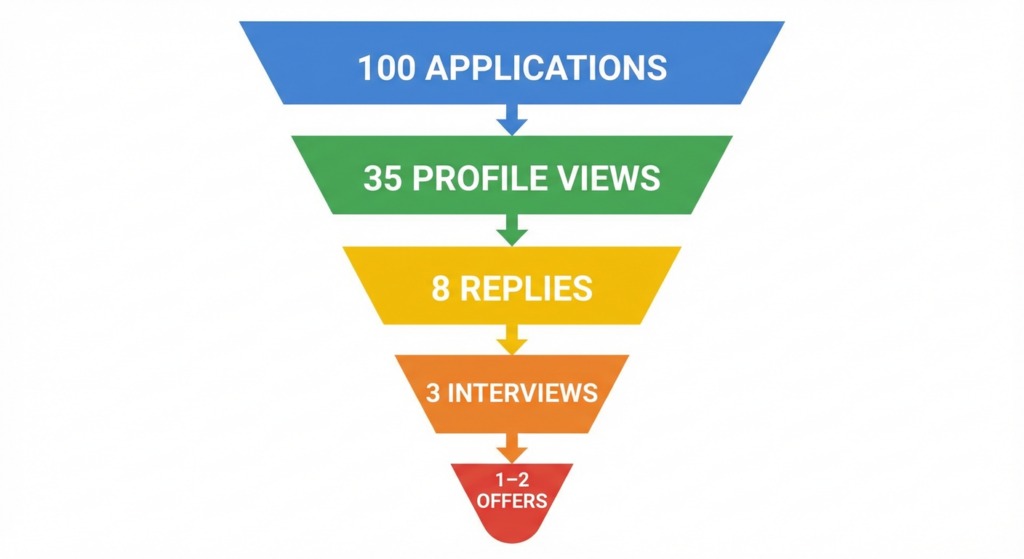
You’re aiming to push the “replies per 10 applications” metric up over time.
Use a small spreadsheet with:
- Columns: Job title, company, date applied, resume variant, response (Y/N), next step.
- Every week, calculate: replies ÷ applications.
If a variant has a near-zero conversion rate after 30–40 targeted applications, it’s not passing ATS or not hitting the right signals. Edit the keywords and bullets, don’t just “try harder.”
If you’re stuck at step one — figuring out where to find your first batch of relatively clean remote listings — here’s how I approach it.
We skip the noise of generic boards like Indeed by using jobright.ai that filters remote jobs specifically for us. Start your search from our go-to starting point.
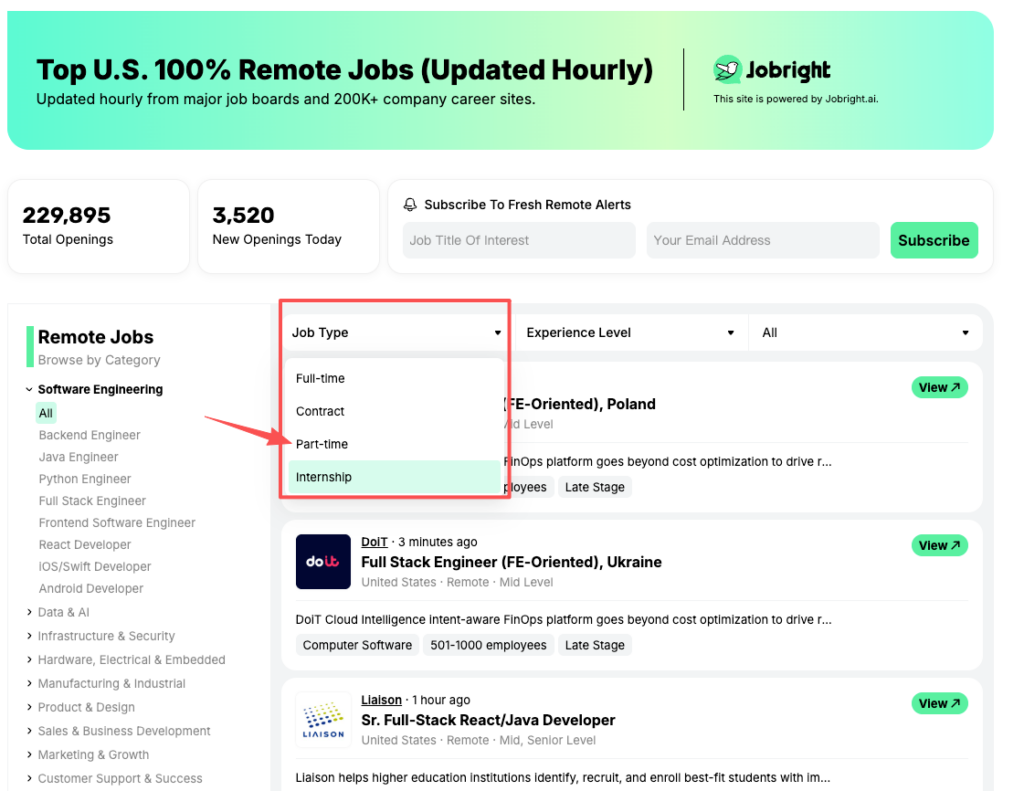
Action challenge (do this today)
Within the next 24 hours, I want you to:
- Pick one lane: data annotation, tech support, QA, or research support.
- Build one micro-resume variant for that lane with quantifiable bullets.
- Apply to 5–7 remote part-time roles in that lane in a single batch, using the short template above.
Then? Track responses for 7 days. Adjust keywords, not your worth.
Signal over noise. That’s how remote part-time jobs stop being a distraction and start being an asset in your tech career, and, for visa-dependent candidates, a bridge that lines up with your long-term strategy instead of working against it.
Frequently Asked Questions About Remote Part-Time Jobs
What are some of the best morning remote part time jobs in tech?
Morning-friendly remote part time jobs in tech-adjacent work include data annotation and labeling, technical SaaS customer support, and content moderation or community support. These roles typically offer clear schedules (for example, 6–10 a.m. windows), measurable tasks, and pay ranges around $15–$30 per hour depending on complexity and region.
What is normal pay for remote part time jobs in tech, and what’s a red flag?
For US-based remote part time jobs, general customer support usually pays about $13–$20 per hour, technical support $18–$30, data annotation or quality-heavy data entry $15–$28, and specialist roles like QA or UX research support $25–$60. Red flags include vague “up to” earnings, huge pay for low-skill work, and any request for upfront fees.
How can I avoid scams when applying for remote part time jobs?
Scan each listing for common scam patterns: requests for upfront money, vague or unverifiable company identity, pressure to accept immediately, payment via gift cards or crypto, and zero clarity on daily tasks. Legitimate employers have a traceable web presence, normal interview or skills tests, written offers, and pay through standard payroll or mainstream platforms.
How do I tailor my resume to get more interviews for remote part-time roles?
Use an ATS-friendly, single-column resume with standard fonts and no tables or icons. Mirror key phrases from the posting—such as “data annotation,” “customer support,” or “QA testing”—and turn your experience into metric-based bullets. Aim for at least an 80% keyword match so your resume parses correctly and survives automated screening.
Which websites are best for finding legit remote part time jobs?
To find legitimate remote part time jobs, prioritize curated or well-known boards such as FlexJobs, Remote.co, and large aggregators like Indeed’s “remote part time” filters. Cross-check companies on LinkedIn, the Better Business Bureau, and with a quick “company name + scam” search before sharing personal information or accepting offers.
You know the red flags; now let us handle the initial filtering for you. We designed JobRight.ai to strip out the noise and surface high-signal remote listings automatically. Start your search with a cleaner list today.
Recommended Reads