
Best AI Resume Builder: What to Look for in 2026
Table of Contents
AI resume builders are everywhere now. Most can generate a professional-looking resume, rewrite bullet points, suggest skills, fix grammar, or produce a summary in seconds.
But the real question is not simply, “Can this tool write a resume?” It is whether the tool can help you build the right resume for the job you actually want.
A resume can be polished and still be ineffective if it hides your strongest experience, misses skills that matter for the role, or reads like a generic AI template.
A useful AI resume builder should help you do five things: match your resume to a specific job, explain what is missing, preserve your facts, improve your writing without erasing your voice, and connect your resume to the rest of your job search.
What Does an AI Resume Builder Do?
An AI resume builder uses artificial intelligence to help create, edit, organize, or improve a resume.
Depending on the product, that might include:
- Creating resume sections
- Rewriting bullet points
- Improving grammar and clarity
- Suggesting skills
- Generating professional summaries
- Formatting a resume
- Comparing a resume with a job description
- Identifying missing keywords
- Recommending improvements for a specific role
The distinction between those last few features matters.
A traditional resume builder mostly answers:
“How do I create a good resume?”
A more advanced AI resume tool should also help answer:
“Is this a good resume for this job?”
Those aren’t the same problem.
1. Look for Job-Specific Resume Matching
One resume shouldn’t necessarily be used for every application.
A product manager applying to a growth-focused startup and the same product manager applying to an enterprise SaaS company may want to emphasize different parts of the same career history.
That’s why job-specific matching is one of the most useful capabilities of Jobright AI Resume Builder.
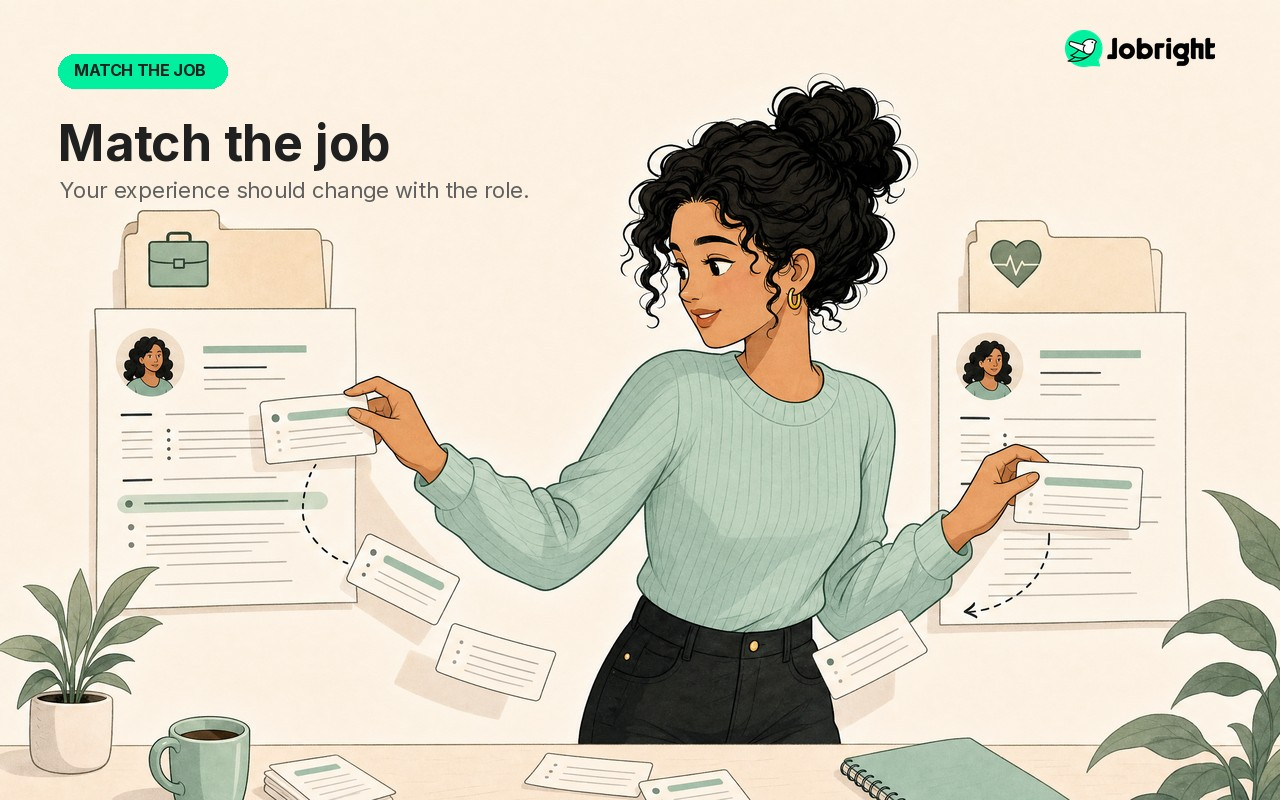
Ideally, you should be able to compare your resume directly against a job description and see where they align. A Jobright Resume Tailor can help turn that comparison into role-specific edits.
That comparison might look at:
- Job title
- Experience level
- Industry experience
- Hard skills
- Role-specific keywords
- Responsibilities
- Resume summary
This turns the resume builder from a writing tool into a diagnostic tool.
Instead of endlessly asking AI to “make my resume better,” you can identify what actually needs attention.
2. It Should Show What’s Missing, Not Just Give You a Score
Scores are satisfying.
A resume gets a 62, you make a few changes, and suddenly it’s an 84.
But a number isn’t particularly useful unless you understand why it changed.
If an AI resume builder provides a resume or match score, look for the explanation behind it. An AI Resume Checker can make that feedback more actionable.
For example:
Missing ATS job keywords:
Python, Kubernetes, CI/CD
Experience mismatch:
Role asks for 5+ years; resume shows 3 years.
Industry alignment:
Relevant SaaS experience found.
Summary issue:
Current summary doesn’t clearly reflect qualifications for the target role.
That’s actionable.
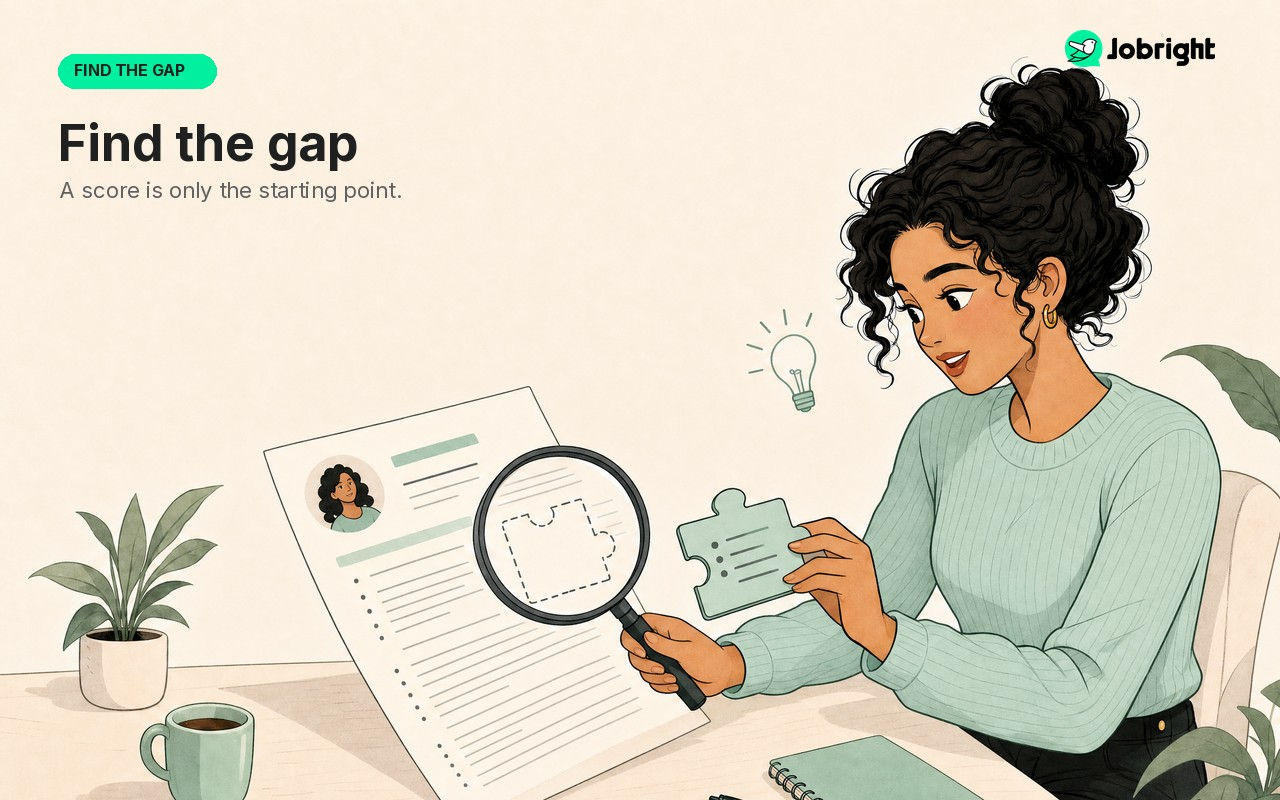
A score without a diagnosis can turn resume optimization into a guessing game.
3. ATS Compatibility Still Matters
Many employers use applicant tracking systems to collect and organize applications.
That doesn’t mean there’s one universal ATS algorithm you can “beat.” Different employers use different systems and hiring processes.
What you can control is whether your resume is straightforward to understand.
A strong ATS-friendly resume generally favors:
- Clear section headings
- Logical structure
- Readable formatting
- Recognizable job titles and skills
- Relevant terminology
- Consistent dates and work history
For a dedicated check, an ATS Resume Checker can help identify potential problems without encouraging gimmicks such as invisible keywords or excessive keyword stuffing.
The objective isn’t to trick software.
It’s to make sure both software and humans can understand your qualifications.
4. Look for Keyword Analysis in Context
Keyword matching can be helpful. Keyword stuffing isn’t.
Imagine a data analyst job description asks for:
SQL
Python
Tableau
A/B testing
data visualization
An AI tool might correctly notice that several of those terms are absent from your resume.
But the next question should be: Have you actually used them?
If yes, the tool should help you show that experience naturally.
Instead of:
Skills: SQL, Python, Tableau, A/B testing
You might write:
Built Tableau dashboards and analyzed A/B tests using SQL and Python to identify onboarding changes that increased activation by 12%.
The keyword is there, but so is the evidence.
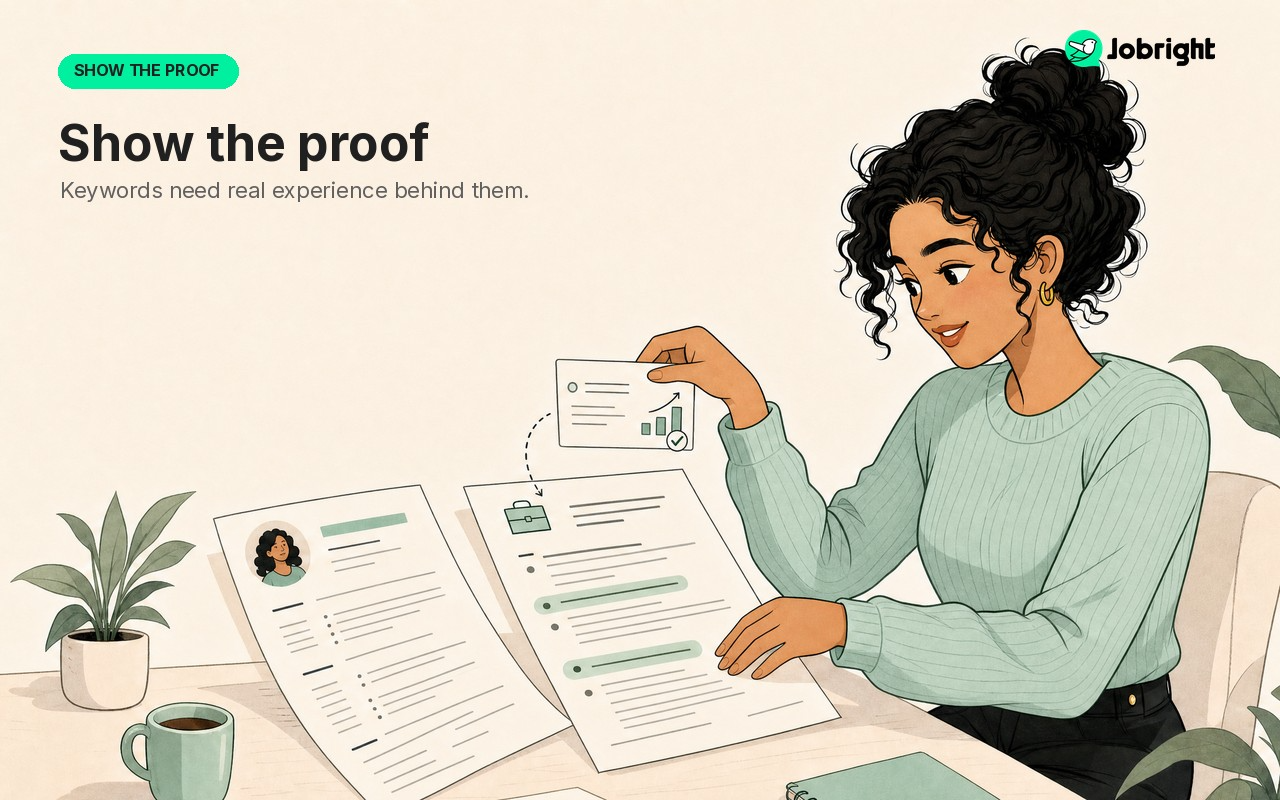
A useful AI resume builder helps connect keywords with experience rather than treating resumes like search-engine documents.
5. Good AI Should Improve Your Writing Without Erasing Your Voice
Resume language should be concise, but it shouldn’t sound manufactured.
One warning sign is a resume filled with phrases like:
Spearheaded strategic initiatives to drive transformational business outcomes.
If the sentence could belong to almost anyone, it’s probably not helping you.
Good AI editing should make your experience clearer and more specific.
For example:
Before
Responsible for helping with customer onboarding.
After
Redesigned the customer onboarding flow with product and support teams, reducing setup time by 25%.
The improvement comes from specificity—not bigger words.
This distinction matters more as AI-generated applications become common. Hiring professionals are increasingly dealing with highly polished application materials that don’t always provide stronger signals about a candidate’s actual abilities.
6. The Builder Should Preserve Facts
This sounds obvious, but it’s worth checking.
Generative AI can occasionally make a statement sound stronger by changing its meaning.
“Helped launch” can become “led the launch.”
“Worked with five customers” can become “managed a portfolio of enterprise clients.”
“Used Python for analysis” can become “developed production Python systems.”
Those aren’t stylistic improvements. They’re different claims.
Always review AI-generated resume content for factual accuracy.
A good resume builder should make it easy to edit suggestions and keep you in control of the final version.
7. Resume Templates Should Be ATS-Friendly and Easy to Read
Design matters—but mostly because good design makes information easier to find.
You don’t need a resume that looks like a magazine spread.
For most roles, a strong template should provide:
- Clear hierarchy
- Consistent spacing
- Familiar section labels
- Readable typography
- Enough room for relevant experience
- A layout that works when exported
Be cautious with templates that rely heavily on graphics, skill bars, unusual columns, icons, or decorative elements if they make the actual content harder to scan.
The resume still has a job to do: communicate your experience quickly.
8. Look for Editing, Not Just Generation
There’s an important difference between a resume generator and a resume builder.
A generator starts from a blank page.
But many job seekers already have a resume. Their real problem isn’t creating one from scratch—it’s figuring out why the current version isn’t working.
For those users, useful features include:
Workflow: Upload an existing resume → analyze it → identify gaps → improve specific sections.
That preserves the candidate’s real experience while making the document more relevant and easier to understand.
It also reduces the temptation to replace a perfectly usable resume with generic AI-generated copy.
9. The Best Resume Tools Connect the Resume to the Rest of the Job Search
A resume doesn’t exist in isolation.
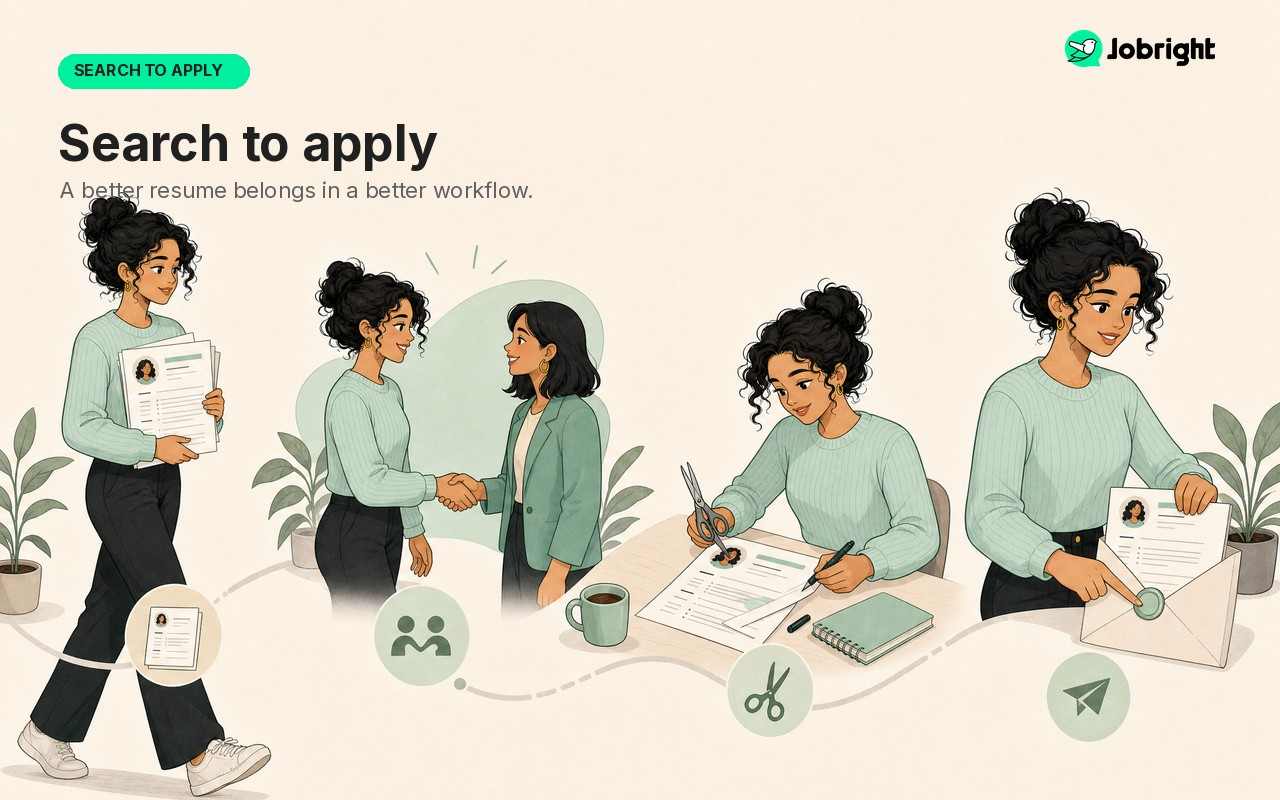
The real workflow is closer to:
Find a job → understand the requirements → check your fit → tailor your resume → apply → track what happens.
That’s why the next generation of AI career tools is moving beyond standalone document generation toward broader job-search assistance. Current AI career products increasingly combine job discovery, resume refinement, application support, and career guidance rather than treating each task separately.
This matters when choosing a tool.
If your resume builder understands the job you’re targeting, it can give much more useful advice than a tool that only sees your resume.
For example, Jobright AI Resume Builder helps connect your resume to the job you are targeting, so you can tailor your experience for the role.
10. Don’t Choose an AI Resume Builder Based on “AI” Alone
Almost every resume product can claim to use AI now.
That doesn’t tell you very much.
When comparing tools, ignore the label for a moment and ask what the product actually helps you do.
Can it tell you why your resume doesn’t match a job?
Can it identify missing skills without encouraging you to fake them?
Can you see where your experience is strong?
Can it improve individual sections instead of rewriting everything?
Can you choose a clean ATS-friendly template?
Can you review and control every change?
And most importantly:
Does the final resume represent you more clearly than the one you started with?
That’s a much better test than how much AI the product claims to use.
Can AI Actually Improve Your Chances of Getting Hired?
There is some evidence that writing assistance can help.
Research highlighted by MIT Sloan examined job seekers who received algorithmic assistance with their resumes. Applicants who received algorithmic writing assistance were 7.8% more likely to receive job offers in that experiment (about 8%). The research also found a relationship between cleaner writing and better hiring outcomes.
That doesn’t mean an AI resume builder can manufacture a better candidate.
It suggests something simpler: how clearly you communicate your existing experience matters.
AI is useful when it helps close that communication gap.
It becomes less useful when it tries to compensate for missing qualifications by making the resume sound more impressive than the underlying experience.
A Quick Checklist Before Choosing an AI Resume Builder
Before committing to a tool, see whether you can answer “yes” to most of these:
- Can I upload and improve my existing resume?
- Can I compare my resume against a specific job?
- Does it identify missing skills and keywords?
- Does it explain weaknesses instead of only showing a score?
- Can I edit every AI suggestion?
- Does it provide ATS-friendly resume templates?
- Can it improve individual sections without rewriting everything?
- Does it keep my experience factual?
- Can it help me move from resume optimization to finding relevant jobs?
If the answer is mostly yes, you’re looking at something more useful than a basic AI text generator.
Conclusion
The best AI resume builder isn’t the one that writes the most impressive-sounding resume in 30 seconds.
It’s the one that helps you understand what a specific employer is looking for, compare that with your real experience, and communicate the overlap clearly.
Look for job-specific matching, actionable feedback, ATS-friendly formatting, contextual keyword analysis, strong editing controls, and clean templates.
And keep one rule in mind:
AI should make your experience easier to see—not invent a better version of it.
Research source: The hiring outcome discussed above is based on the MIT Sloan summary of the field experiment and the related NBER working paper. Read the MIT Sloan summary and the NBER paper.